
First there was the book, then the movie. Eat Pray Love. Thanks Hollywood: now nearly everyone has fantasized about falling in love in Bali. But how many of them have heard of Yogyakarta, pronounced, JOGE-ja-karta? Very few I bet. Let’s change that.
Affectionately known simply as Yogya (Jogja) the city is in south central Java, the same island home to Jakarta, the northwesterly capital city of Indonesia. Known as the cultural hub of the island, it offers the traveler a rich heritage of Javanese arts, such as dance, textiles, jewelry making, even shadow puppetry. The city has a youthful vibe, owing to its large student population, hosting the country’s largest and most prestigious institute of higher learning.
Day 1 | The World’s Largest Buddhist Temple
One of the city’s two UNESCO World Heritage Sites, Borobudur, is the world’s largest Buddhist Temple and Indonesia’s most visited tourist attraction. Constructed of stone in the 9th century, the temple is a series of stacked square platforms topped with a central dome. It is decorated with over 2,600 reliefs, telling the story of the life of Buddha. There are 72 stupas, each one containing a seated Buddha statue posing with a different mudra, a hand position meant to help balance or channel energy.

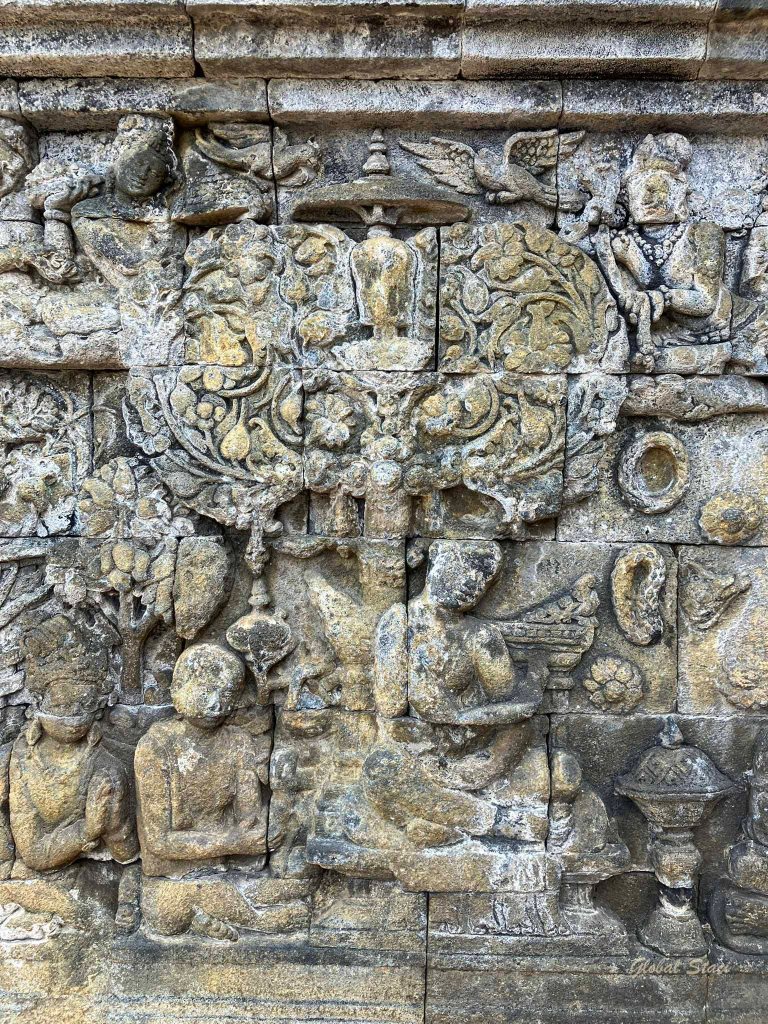

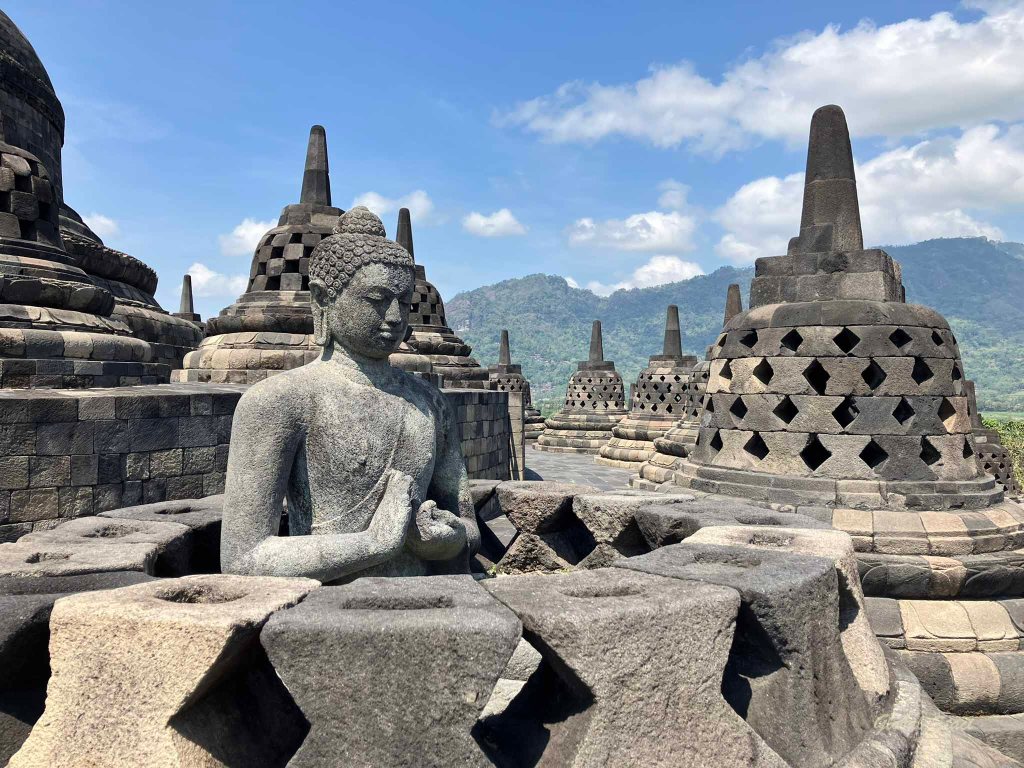
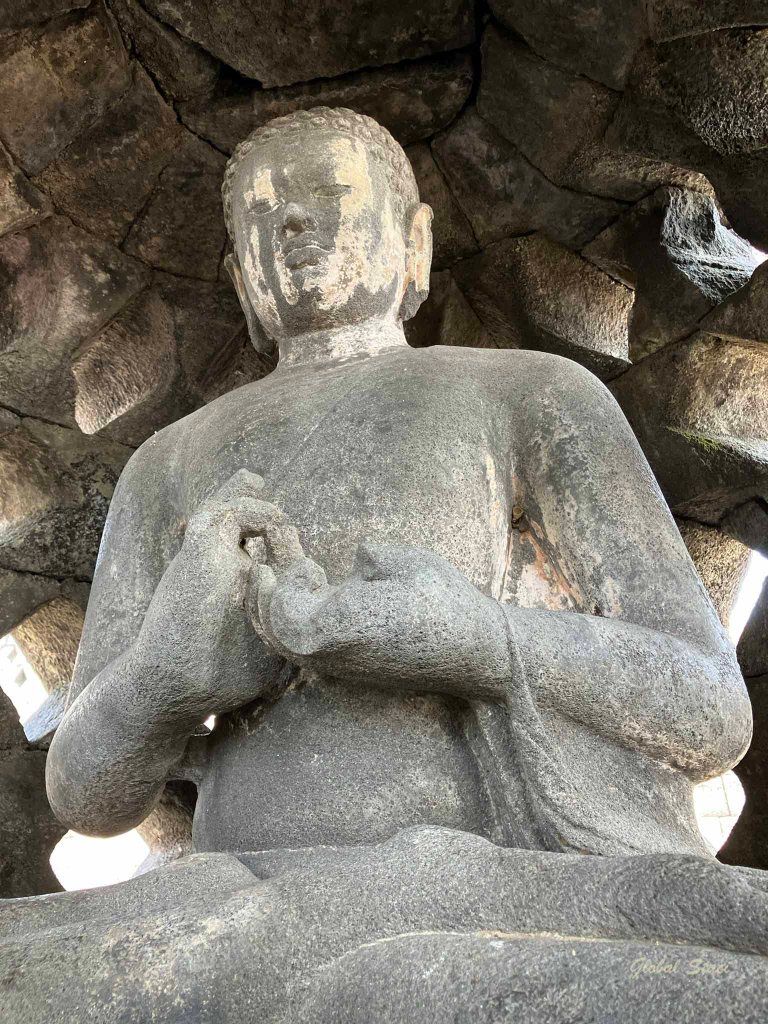

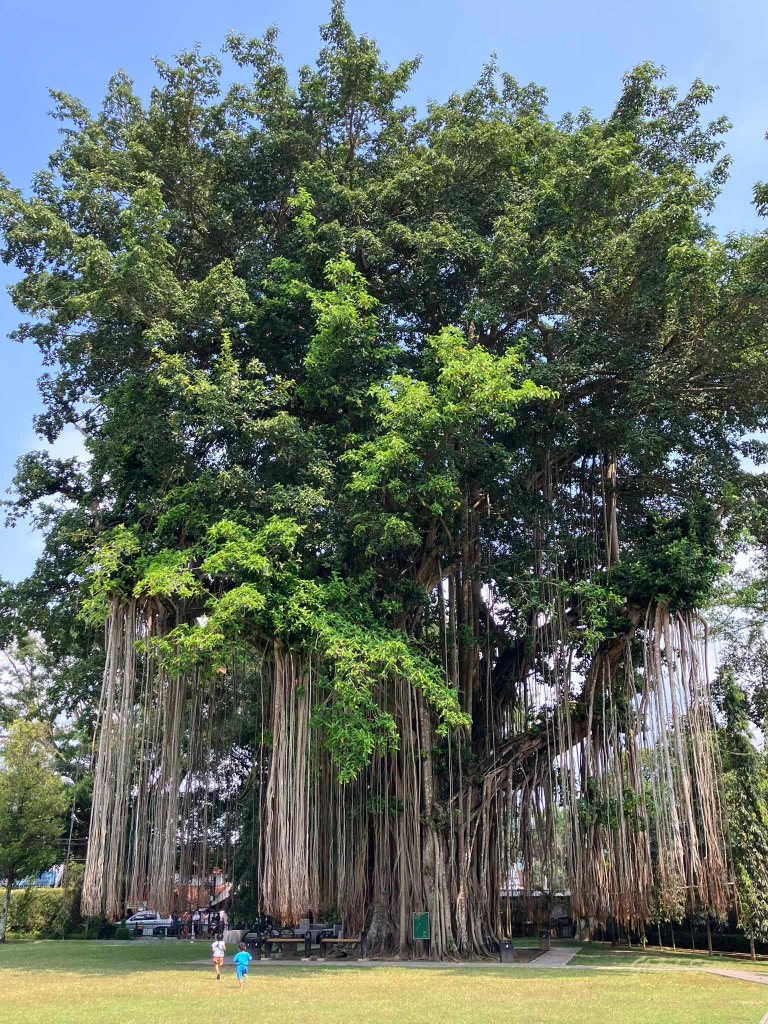
Wanting to see all the temples in the area, we also stopped briefly at Pawon Temple, Mendut Monastery, and Mendut Temple, which was under restoration. The tree on the property was nearly as amazing as the temple itself!
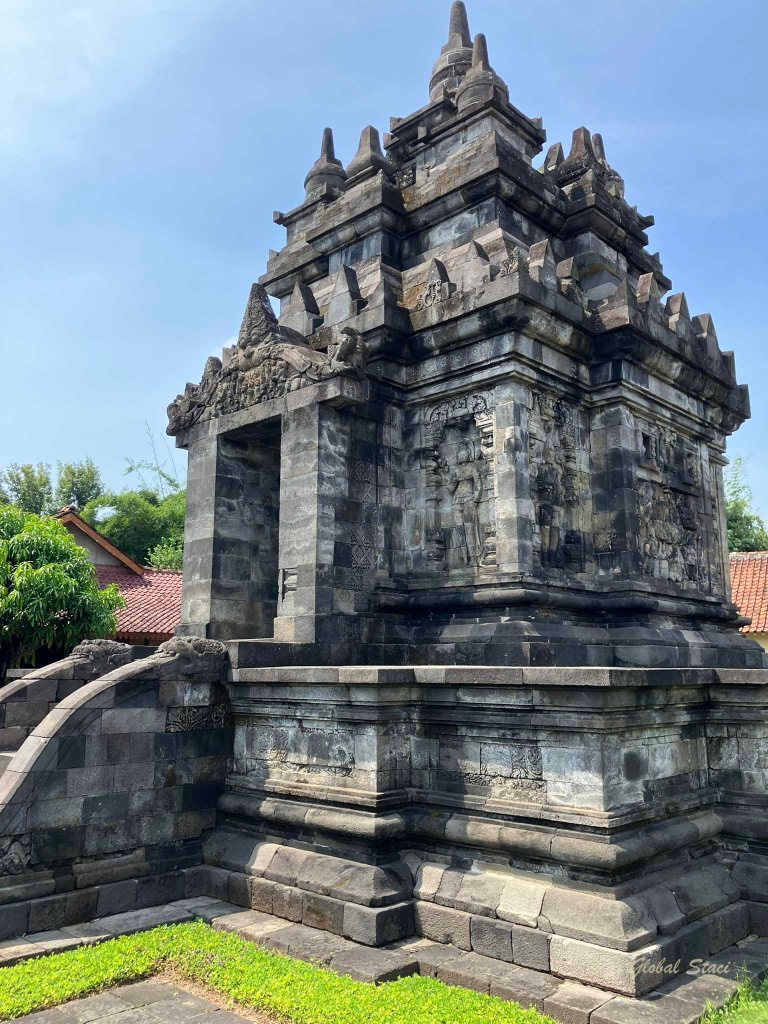

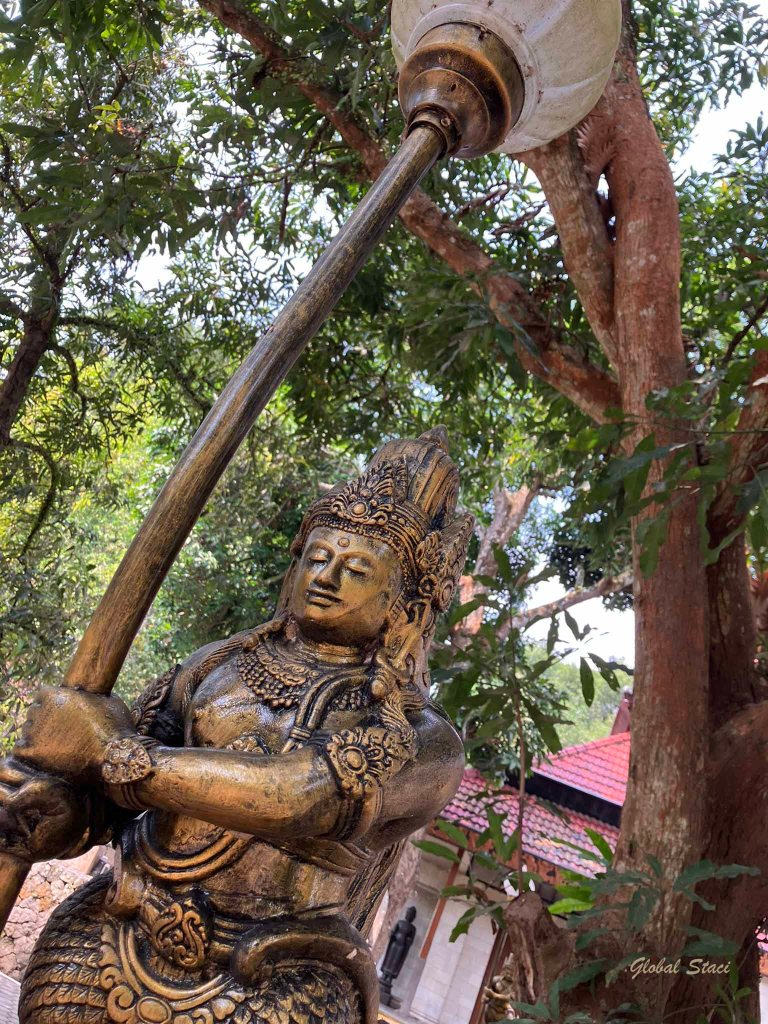
From one temple to the next we noted the ubiquitous lotus motif, symbolizing purity, enlightenment, and the potential for all beings to awaken. The beautiful flower grows in muddy waters, representing how one can rise above suffering and material attachment to achieve spiritual enlightenment and clarity.
[PRO TIP: For two reason we stayed at the fabulous Villa Borobudur Resort, proximity to the sites and its overall affordable luxury. We booked our airport transfer and Borobudur tour through the hotel, which included a driver, a temple guide, the upgraded entrance ticket and a boxed lunch. Well worth it.]



Day 2 | The Chicken Church
This was a serendipitous find. While browsing a brochure at the resort, we learned of a most unusual monument. Out in the middle of nowhere, Bukit Rhema, aka the ‘Chicken Church’, originally built as a place of prayer and meditation, now stands as an ecumenical behemoth of a tourist attraction. The nickname comes from the unique shape of the building, which resembles a hen, more so than the dove it was intended to look like.
Daniel Alamsjah, who claimed to have been inspired by God through a dream he had in 1989, built it as a place of worship, but the project was never finished, and the building fell into disrepair until recently when it was turned into a tourist attraction and, believe it or not, wedding venue. Tiny rooms can still be reserved for private prayer. You can climb all the way to the top into the head and crown. Off in the distance, you can see Borobudur Temple.
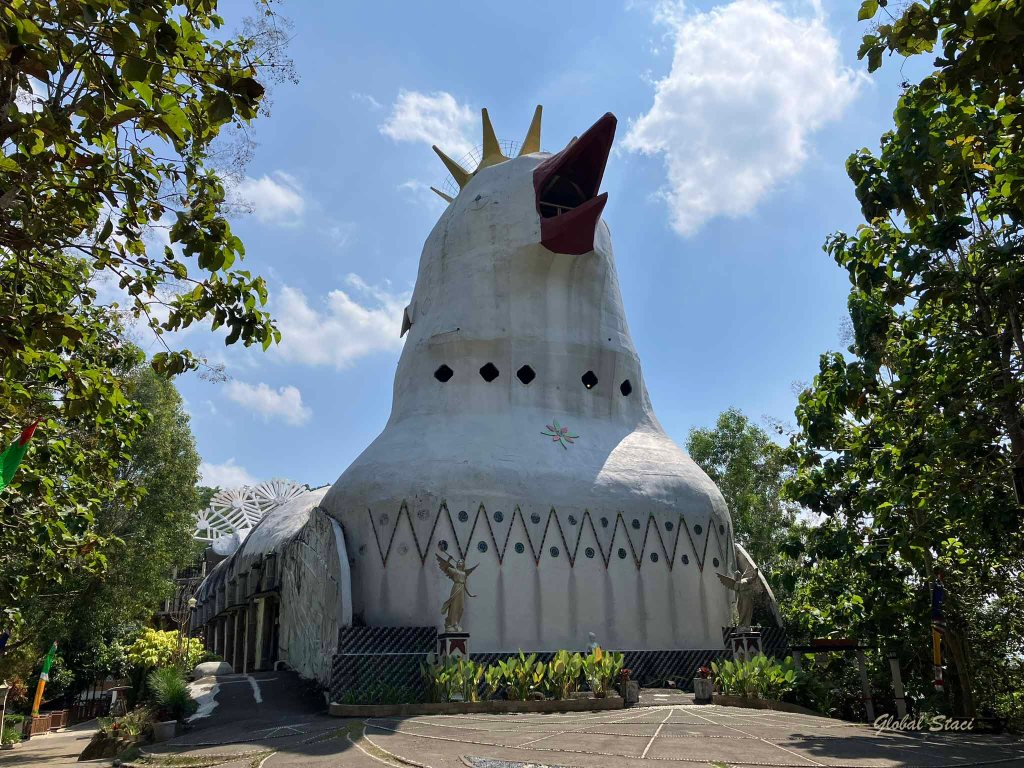
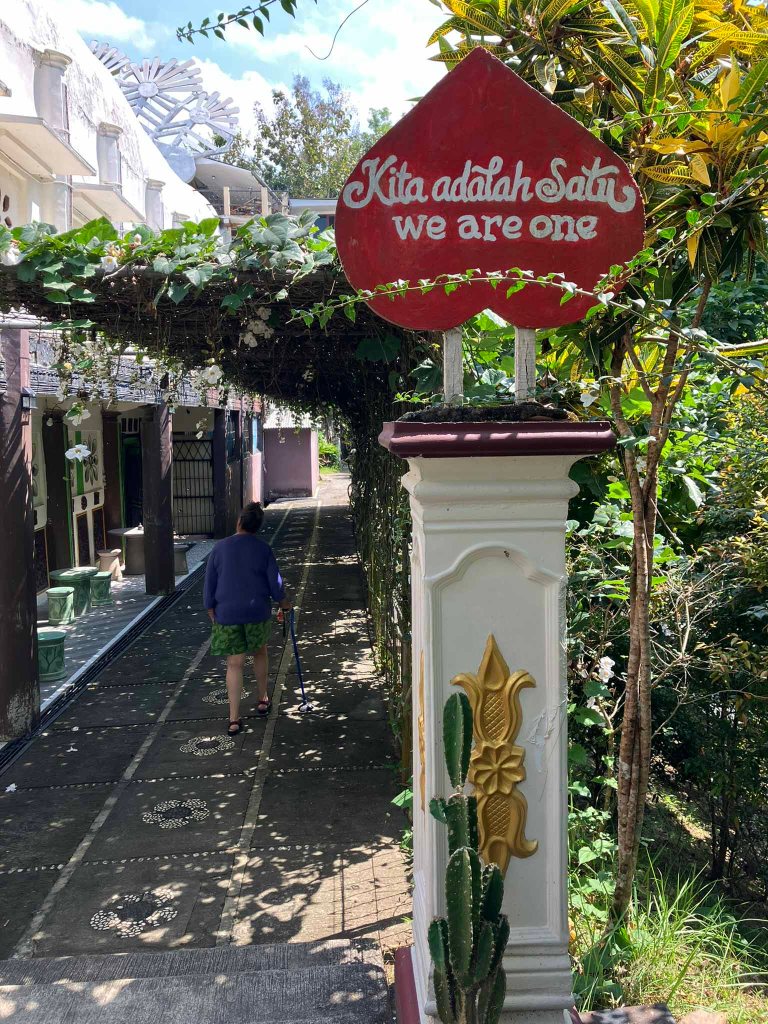
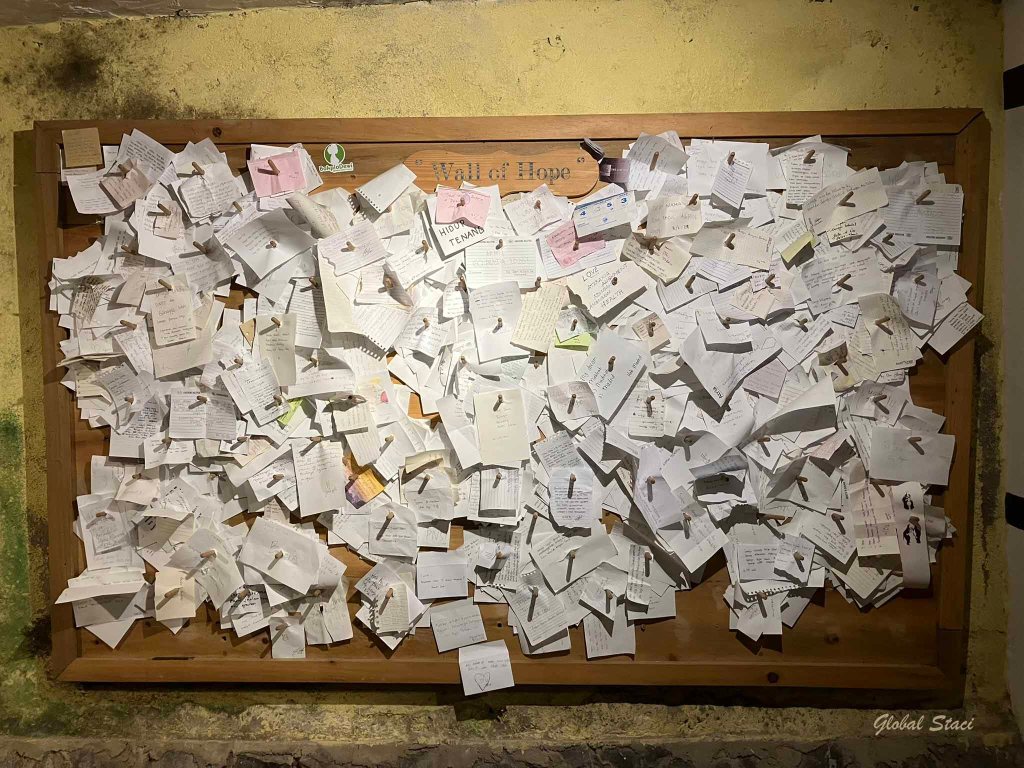


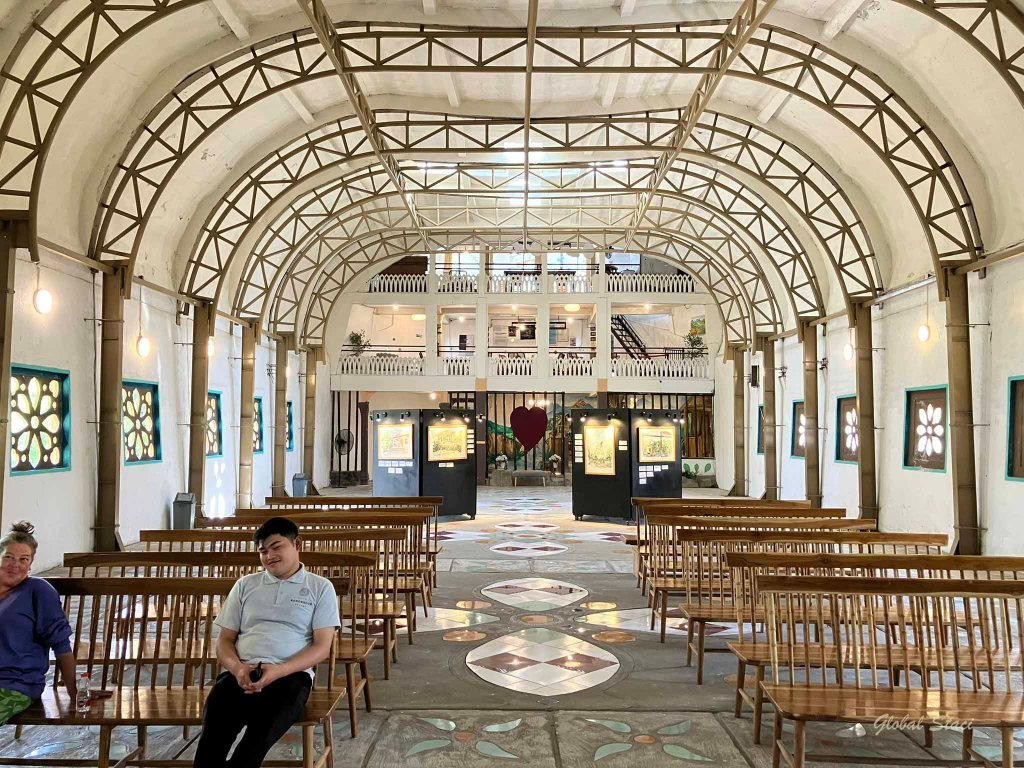


It’s definitely worth a visit, with a small entrance fee, a very nice cafe with a view, and an excellent gift shop stocked with high quality locally made handicrafts and treats.
Day 3 | Easing on Down the Road
We enjoyed a leisurely morning at the resort before saying goodbye to our tiny slice of heaven. The drive to Yogyakarta was only about an hour, so we arranged for our driver to take us to a batik shop along the way. Indonesian batik is a traditional dyeing technique that uses wax to create intricate patterns on fabric. It is recognized as a UNESCO Intangible Cultural Heritage and is especially prominent in Java, where it has been practiced for centuries.
[PRO TIP: This part of Java is dotted with batik workshops and stores where you can both learn the process and purchase textiles of varying quality. Ask around to find a place that’s not too touristy, and do a bit of bargaining, which is expected.]

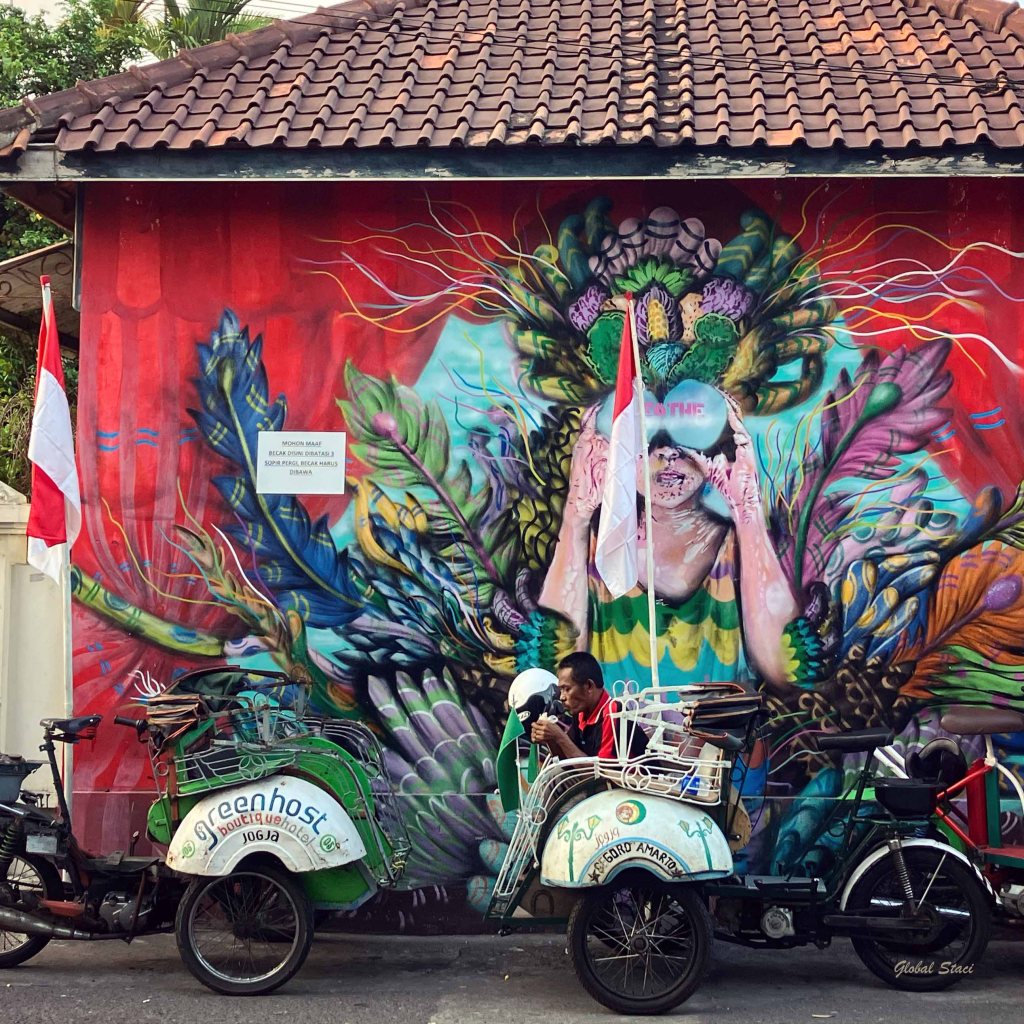

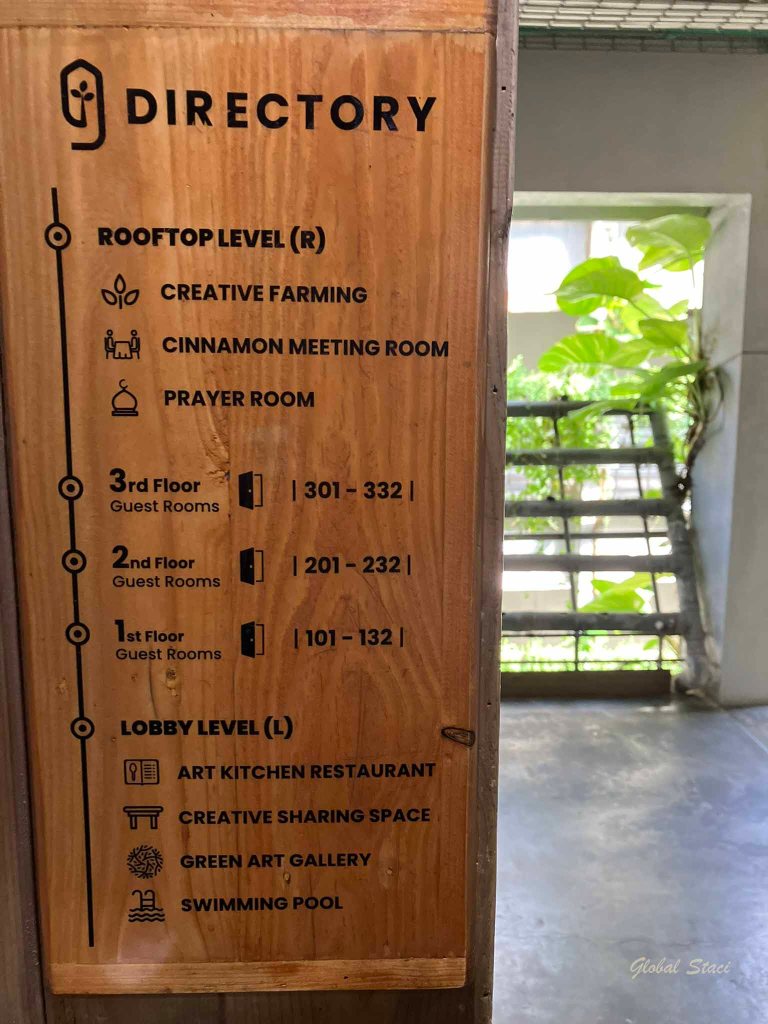

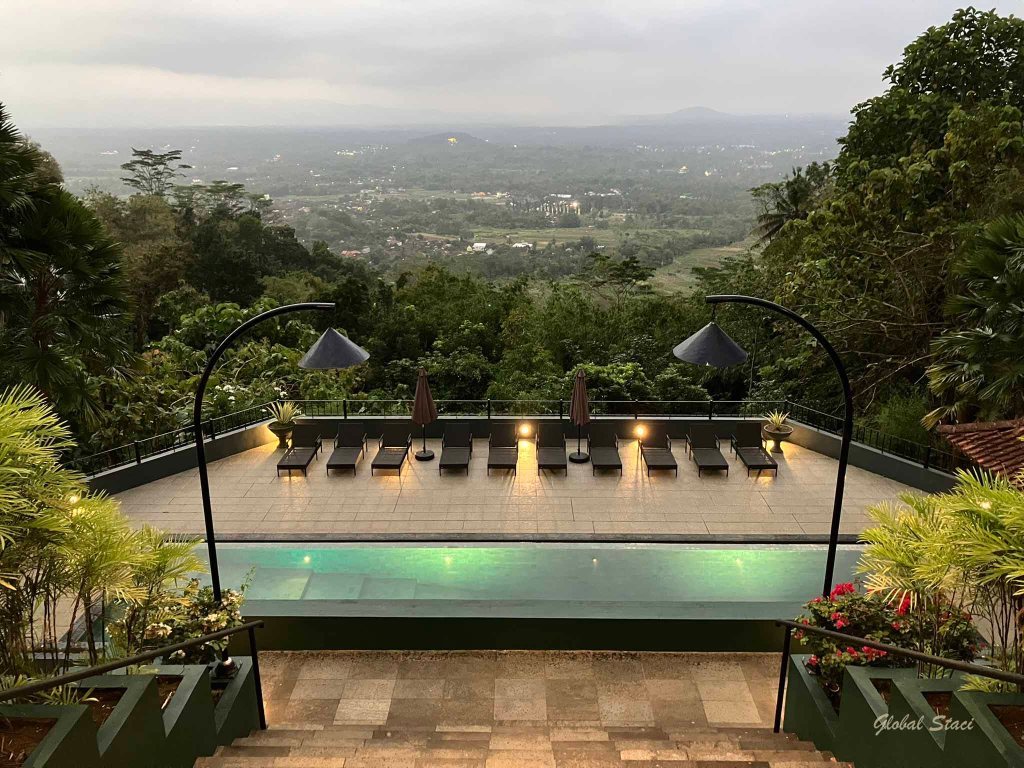
That afternoon we checked into yet another hotel, a place I’d read about and really wanted to check out, the Greenhost Boutique Hotel. This lovely oasis, nestled in the Prawirotaman neighborhood, practices sustainability throughout, for an amazing price. From the large, covered lobby with pool and walls lined with plants, to its rooftop garden growing fruits and vegetables used in its highly regarded restaurant, to well-designed rooms with eco-friendly amenities and a spa, this hotel has it all.
Even if it was only one night, it was worth the stop.
Day 4 | Getting to Know Jogja
This morning, we headed on for our guided tour of the Kraton, or Palace of Yogyakarta, and the Tamansari Water Castle, two of the city’s best-known attractions.
[PRO TIP: We booked a guided tour, but you can certainly find these places and buy your own tickets upon arrival. We opted to follow the guide and work less. Keep in mind that even English-speaking guides can be difficult to understand.]
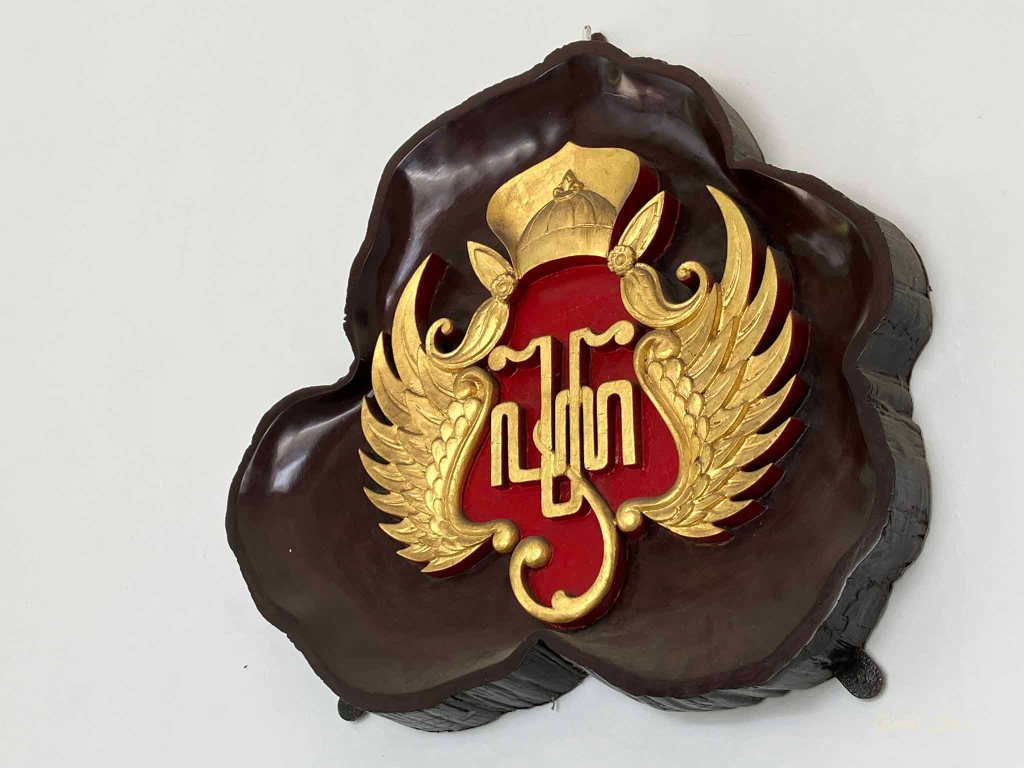
The Palace, a splendid example of traditional Javanese architecture, was constructed during the reign of Sultan Hamengku Buwono I, in 1755 – 1756. It continues to be used, both as a home of the Sultan as well as other important ceremonial and cultural functions of the Yogyakarta court.
[Notice the photo bottom right, of the beautiful table set for a banquet for Indonesian diplomats and court officials. I’d never seen such a table set without silverware. Indonesians typically do not use silverware. A wonderful example of learning to appreciate cultural differences.]
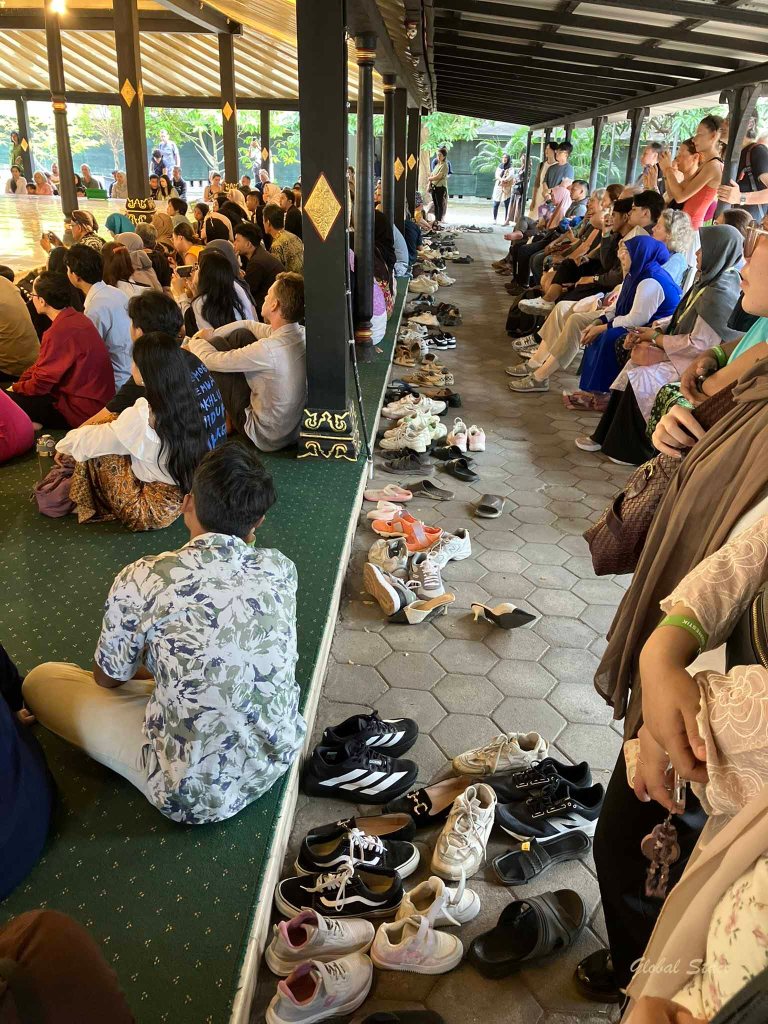



Located within walking distance to the Palace, the Water Castle was originally built as a garden complex for the royal family to enjoy some R&R. From the sultan’s private pool and the tower above it, he could freely look down on the princesses bathing and choose his delight.


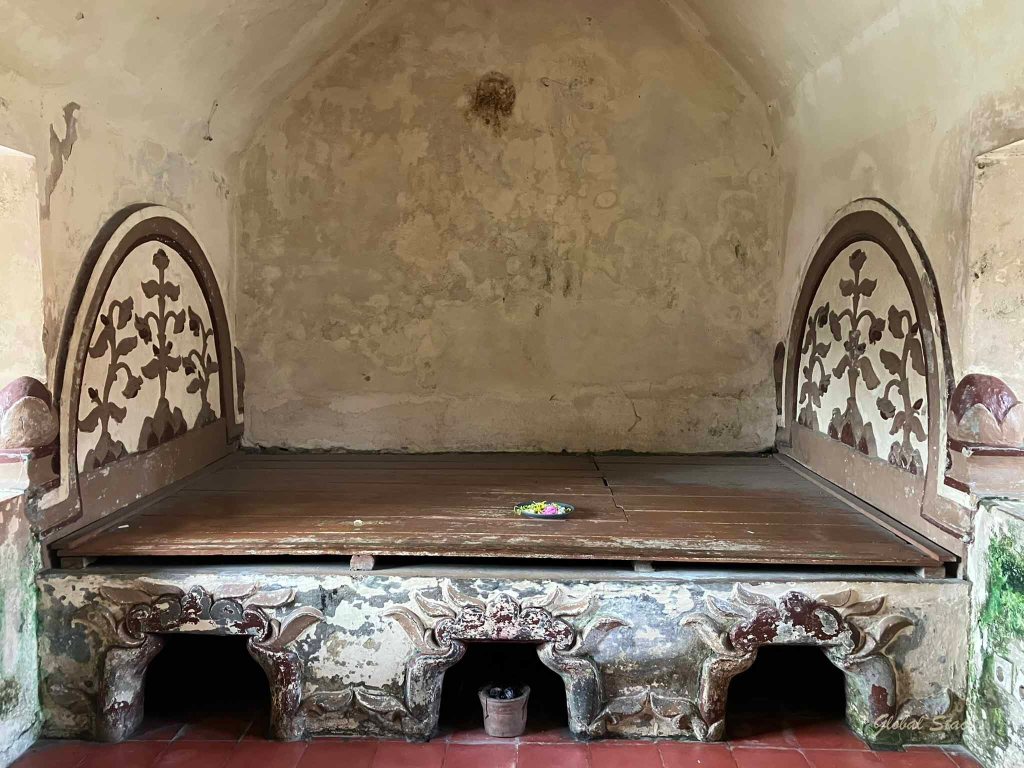
Among the ruins of the Water Castle complex, you can plainly see earthquake damage. Indonesia has the most volcanoes of any country in the world. Nearby Mount Merapi is an active volcano and a popular trekking destination.
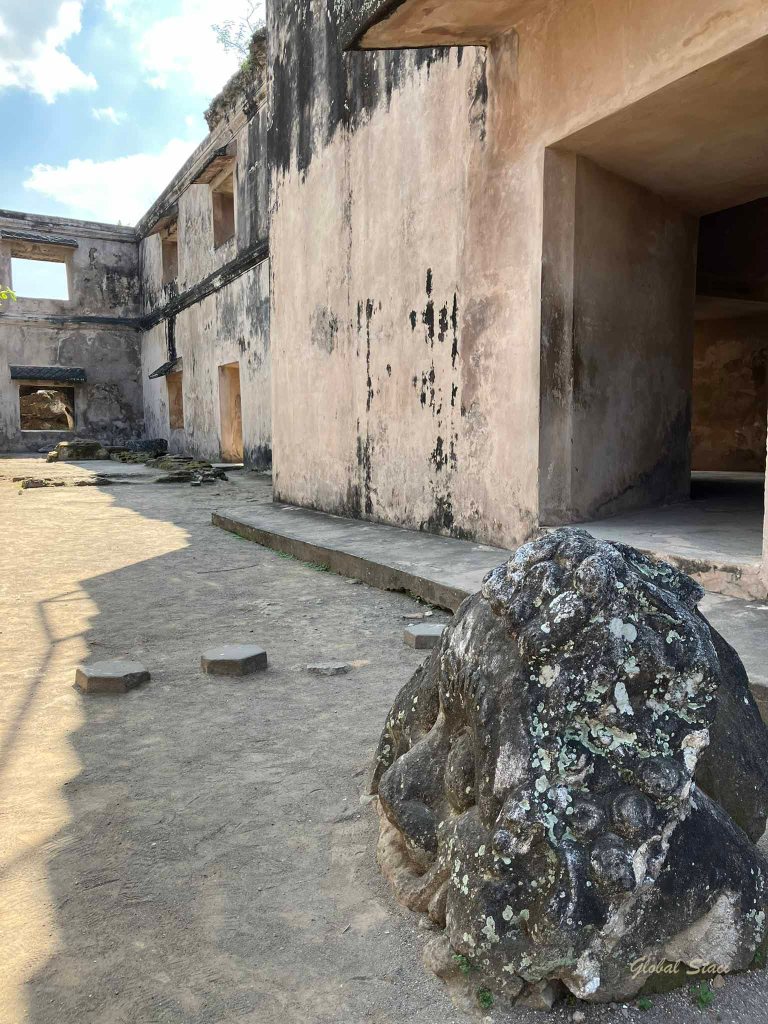

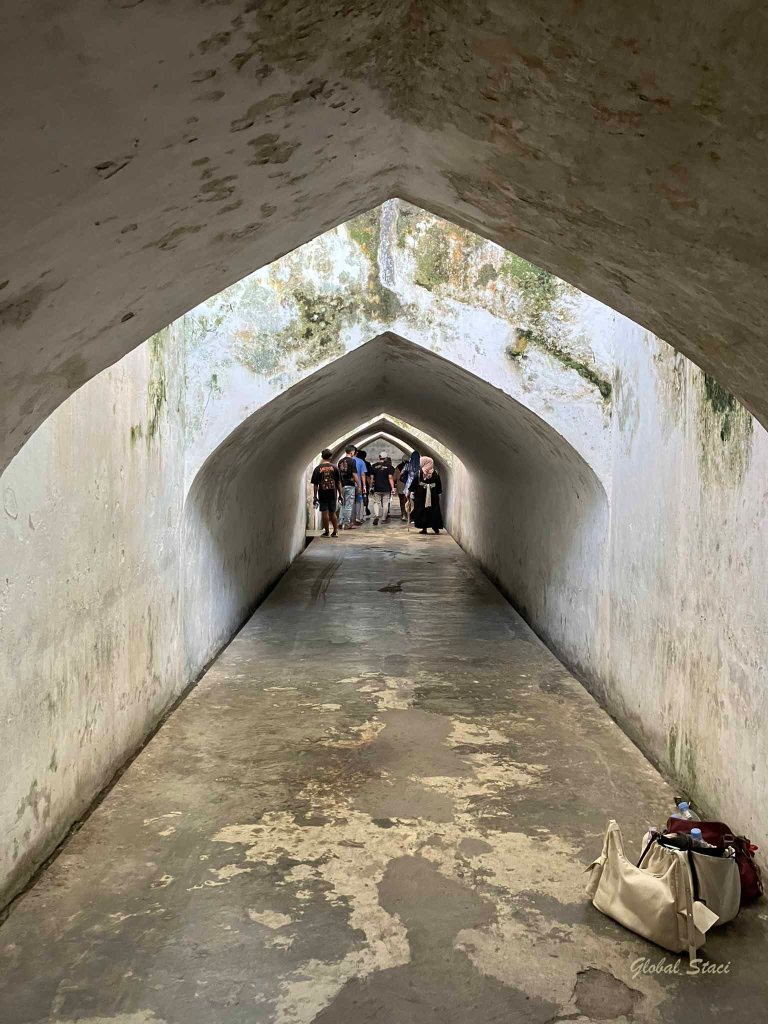
Day 5 | From Buddhism to Hinduism
We opted again for a guided tour of Prambanan Hindu Temple Compound, the second of Yogyakarta’s UNESCO World Heritage Sites. It is the largest Hindu temple site in Indonesia and the second largest in Southeast Asia after Cambodia’s Angkor Wat.
Characterized by its tall and pointed architecture, built in 850 during the reign of the Hindu Sanjay’s dynasty, Prambanan honors the expression of God as the Creator (Brahma), the Preserver (Vishnu) and the Destroyer (Shiva), the largest temple.


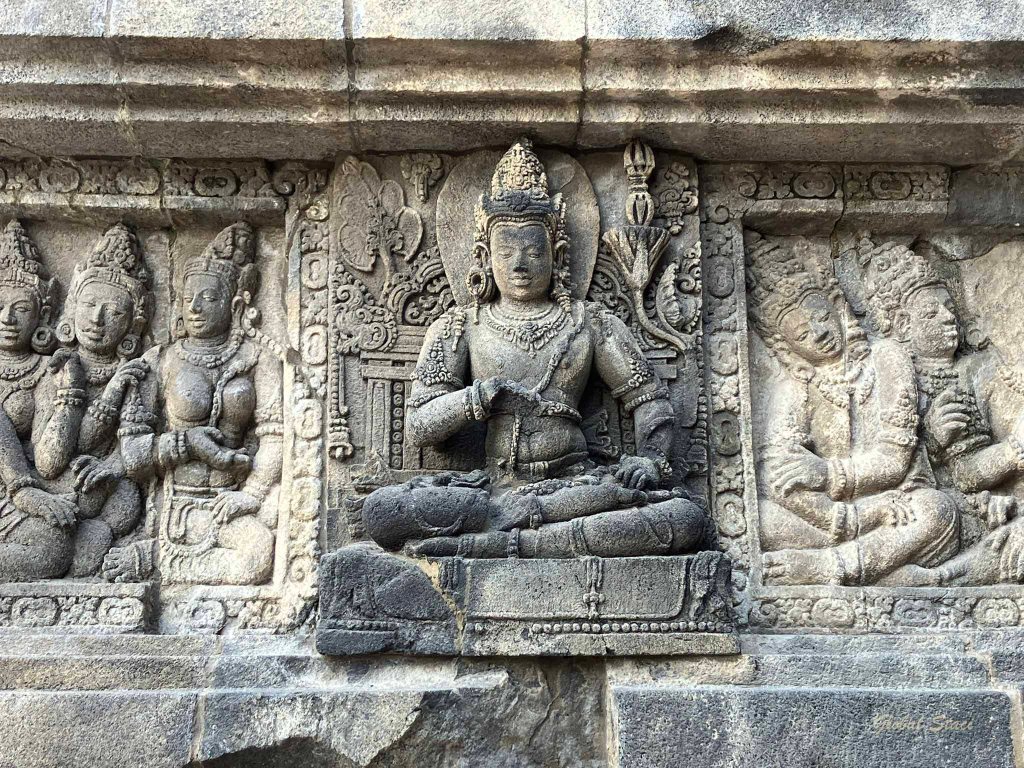


The devastating 1006 eruption of Mount Merapi and earthquakes may have been the cause of the demise of the complex, which began to deteriorate afterward. It was rediscovered in 1733, but restoration efforts were not begun in earnest until the 20th century. Originally there were 240 temples, only a handful have been renovated. Recent UNESCO status has helped improve the conditions.
[PRO TIP: There are other temples to explore on the site, and there is a small open-air bus that will take you to the sites. As you exit the complex you will have to walk through a huge market (a Disney-esque move) with vendors selling everything from soup to nuts.]
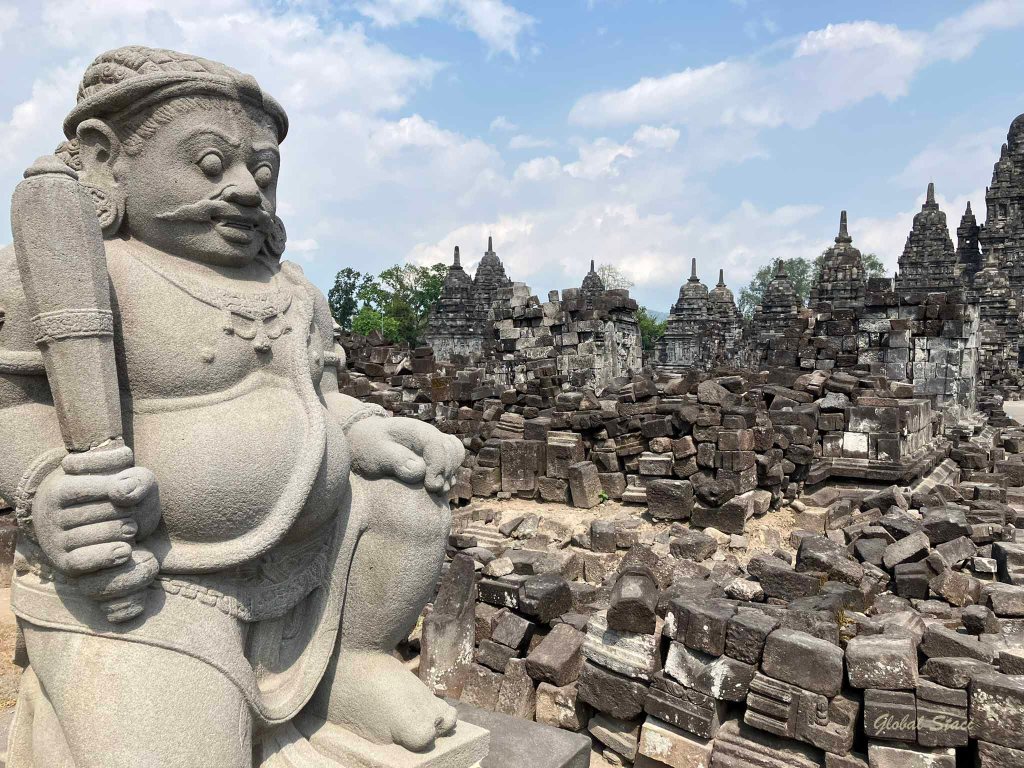
Sewu Temple, older than Prambanan (792), reflects Buddhist architecture during the Mataram Kingdom.

Day 6 | Time to Get to Work!
We would spend the next week volunteering with our Habitat for Humanity Australia Global Village Team, partnering with Habitat Indonesia, helping to construct a home for a deserving family in need.
Our team stayed at the Ibis Styles Hotel just off Malioboro Street, the center of Yogyakarta’s largest tourist district surrounded with many markets, restaurants, and shops.
 Global Staci
Pingback: Combining work and play in Yogyakarta, Indonesia
Pingback: Why does everyone think they love Bali?
Pingback: The 2 Night Stopover, Istanbul, Turkey
Pingback: MALAYSIA | Chilling in Hot Kuala Lumpur | Global Staci