The Republic of Georgia has been enjoying its time in the travel media limelight. It seems every travel blog I read waxed poetic about the tiny country with a familiar name. Perhaps because of its generous digital nomad visa, allowing expats to stay a full year, or because of the great food and the easy-on-your-wallet prices, travelers are flocking to the country firmly anchored by the Caucasus Mountains, straddling the intersection of Europe and Asia.

Having just spent two weeks in Armenia, my commute to Georgia was an easy one. My friends and I opted for the short flight from Yerevan to Tblisi on Georgian Airways, where we picked up the car rental. (*I should add that only the airline tickets were booked in advance. Everything else in this itinerary was booked on the fly!)
[PRO TIP: Always book your airfare with the exact name that appears on your passport. Otherwise, you risk not being allowed to board, or having to purchase another ticket, which may not always be possible! And don’t forget to withdraw some Georgian Lari from the ATM upon arrival.]
First, a word on Georgian FOOD.
It’s delicious.
And Khachapuri is the stuff of legends. This traditional Georgian cheese bread can be prepared a number of ways. You’ll have to try it for yourself, along with Khinkali (dumplings), Lobio (bean stew), Chvishtari (corn crusted cheese), Pkhlovani (spinach pie), Chikhirtma (chicken soup) and Georgian salad. For the brave of palate, Churchkhela, a traditional Georgian candle-shaped candy that tastes as waxy as it sounds. Its main ingredients grape must, nuts, and flour.
Beware. Chacha is Georgian brandy.
Day 1 | Stepantsminda
Our mountain hiking adventure began in Stepantsminda, home of Mount Kazbegi. Gorgeous mountain scenery begins just by looking out the car window, complete with cows, who confidently sashay wherever they will. I recommend staying, and if convenient dining, at Suatis Resort. Our favorite restaurant (there are not many) was Makato in Kazbegi, and Cafe 5047 (named for the height of Mt. Kazbegi in meters) for beers.

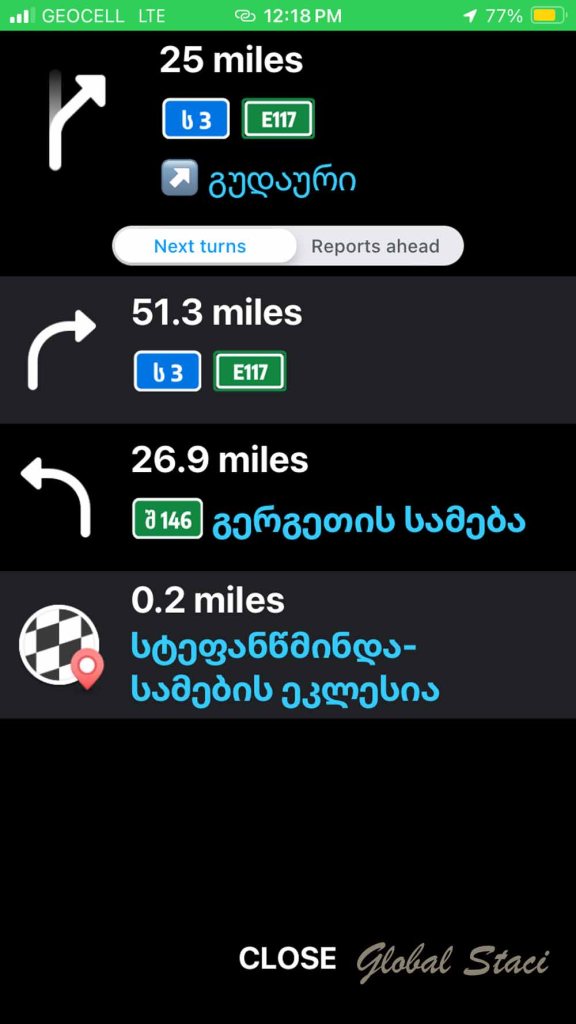
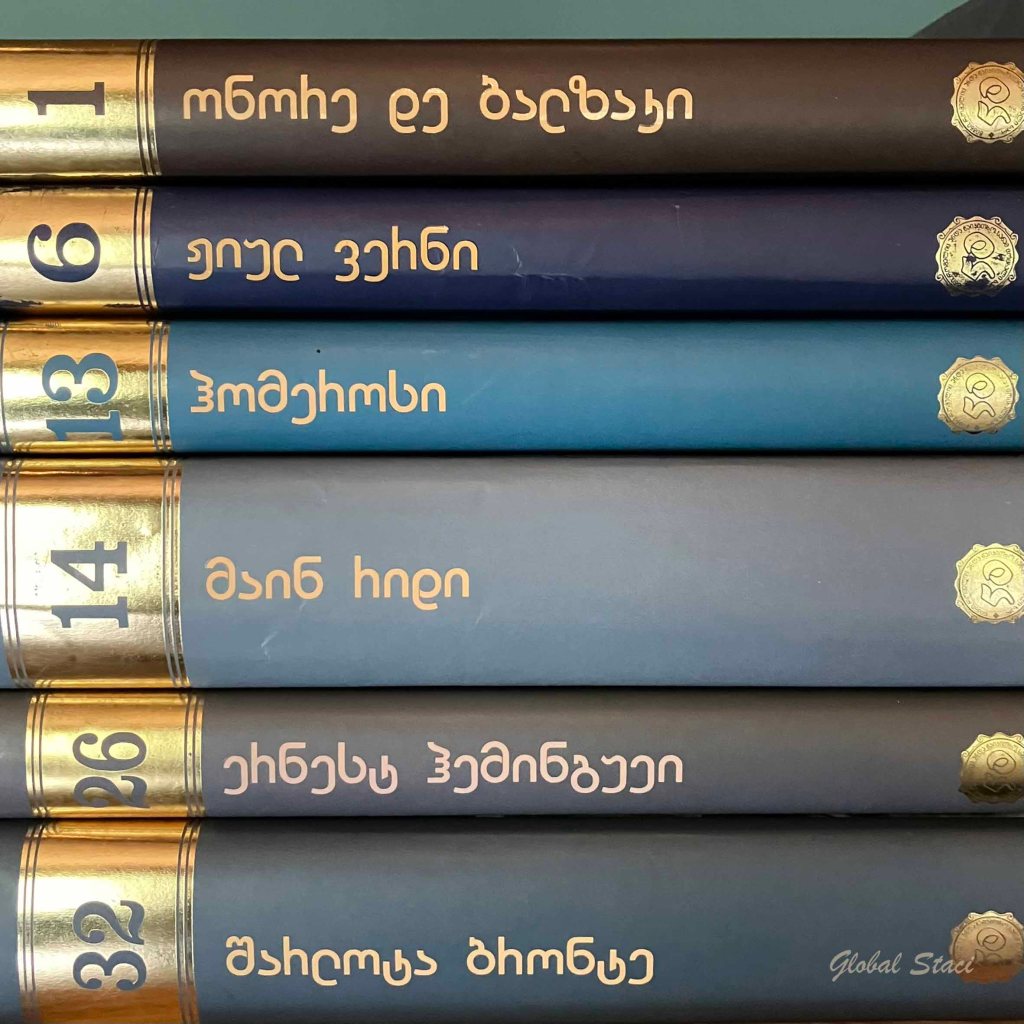


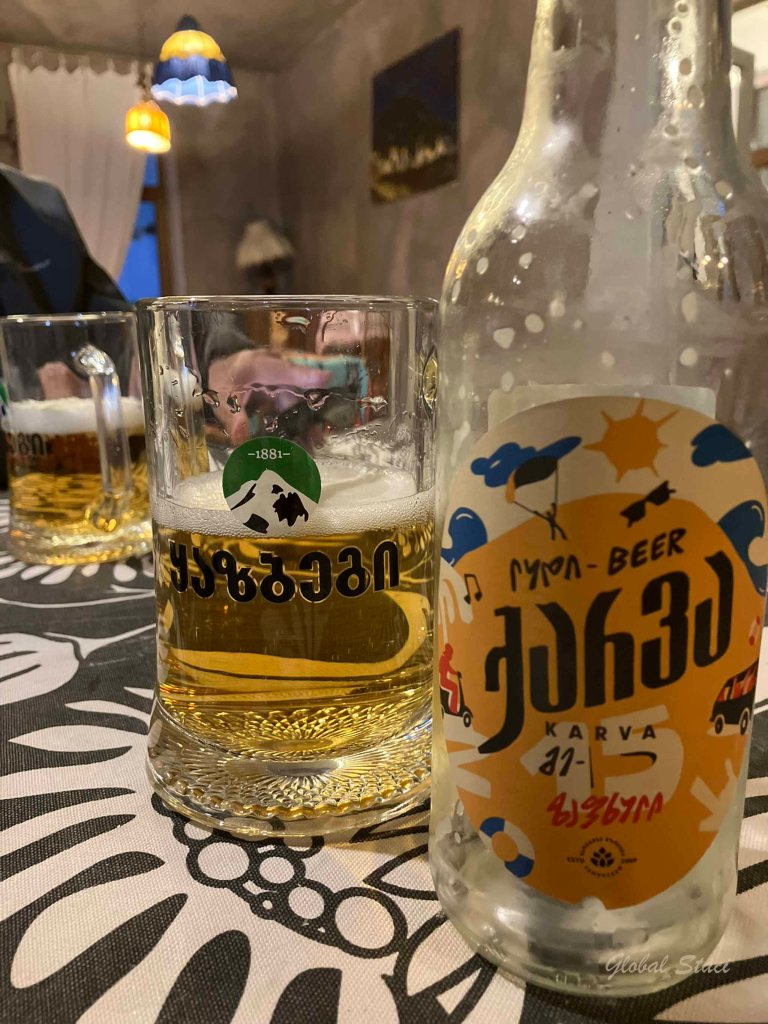
Day 2 | Hiking Juta Pass
This was one of those “just wing it” days. My friend lead the way using AllTrails and his gumption. It was a beautiful hike, but a bit of a harrowing drive. Part of the road was under construction so we, like others, parked our car on the side of the road and took a local taxi (not coincidentally they were waiting) to the town to start the hike. Afterward, reward yourself with a snack and local beer at the Juta Pass Cafe and Bar, which also has a restroom.
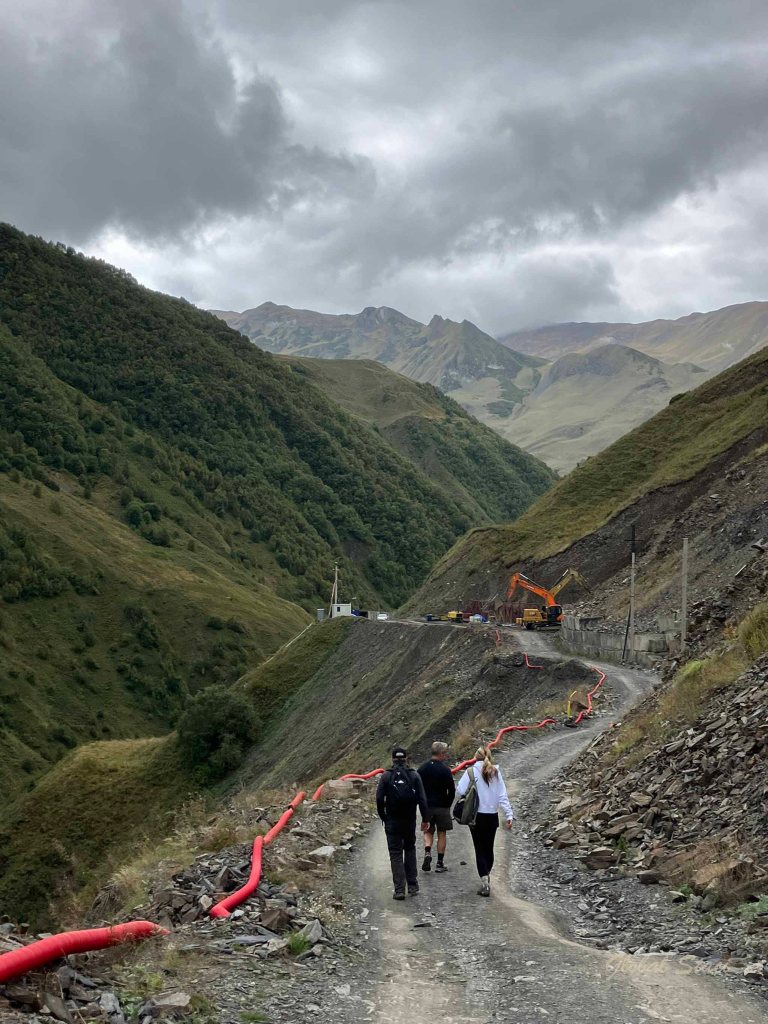


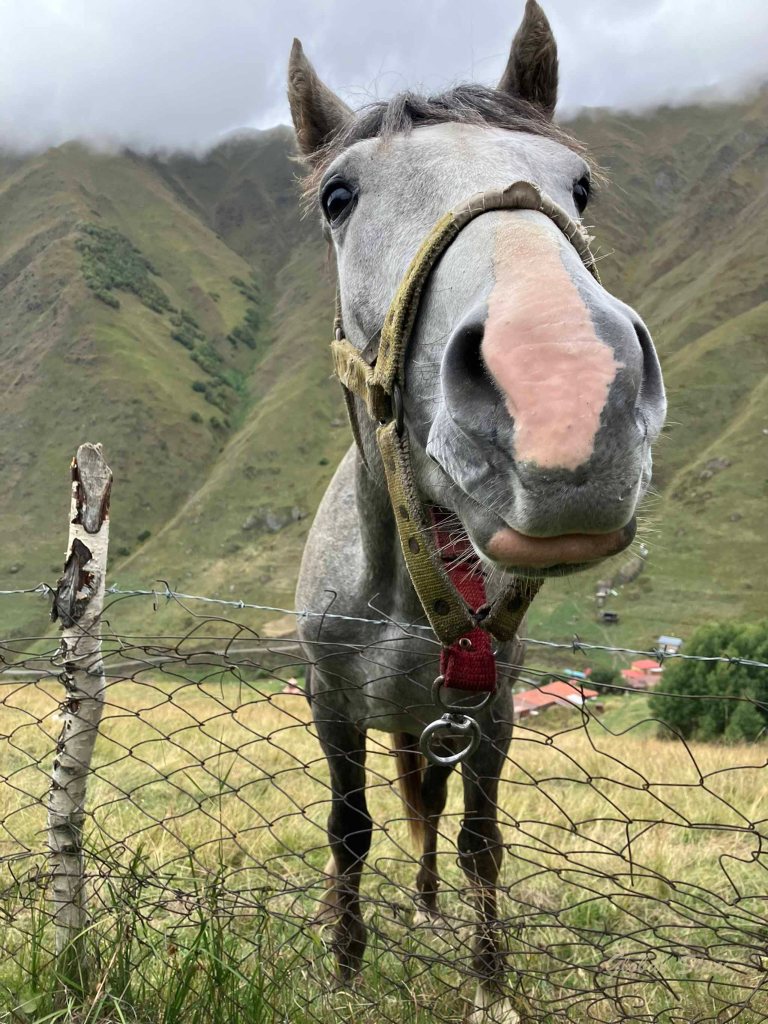

Day 3 | Orthodox Architecture
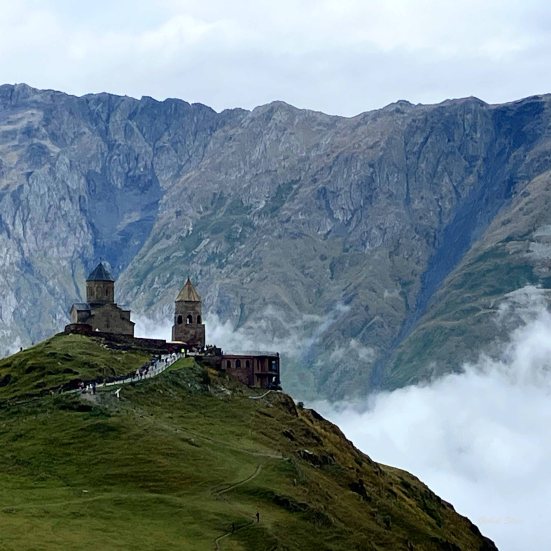
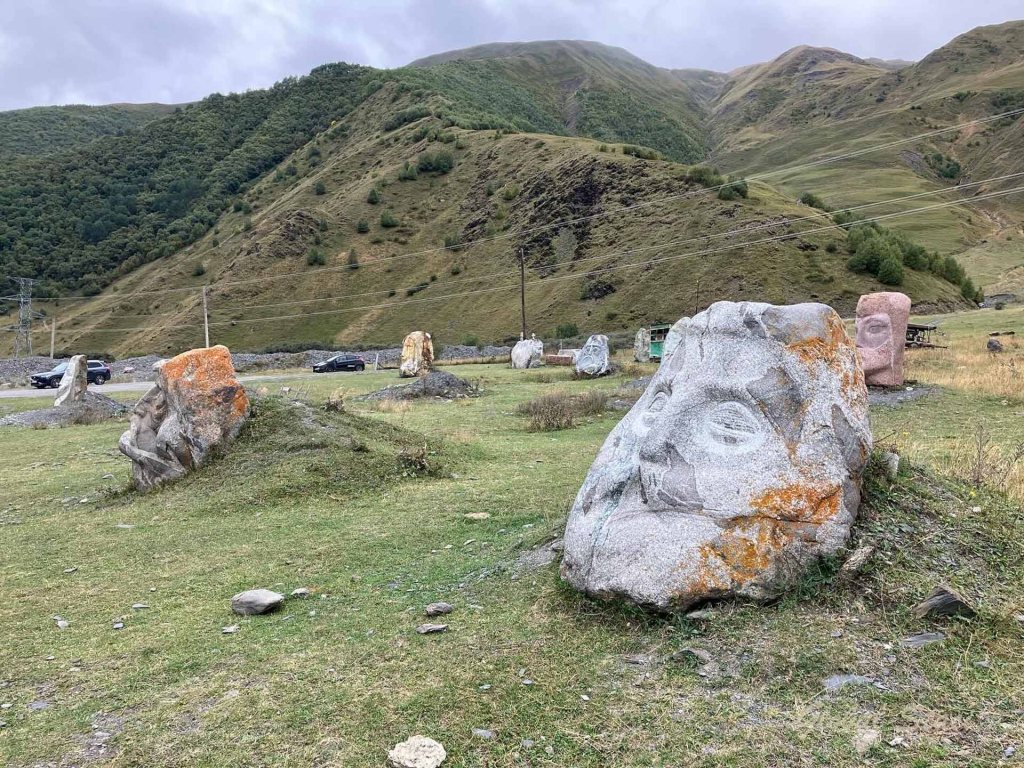
Georgian mountain hiking continues to earn its accolades! After a morning hike a visit to the cascading Arsha waterfalls, and the Gigantic Sculptures by Merab Phiranishvili in Sno, we made our way to the must-see 14th century Gergeti Trinity Church, singularly sitting atop a mountain. You can drive or hike there.
[PRO TIP: Ladies must cover their heads and men must cover their legs; coverings provided should you need them.]

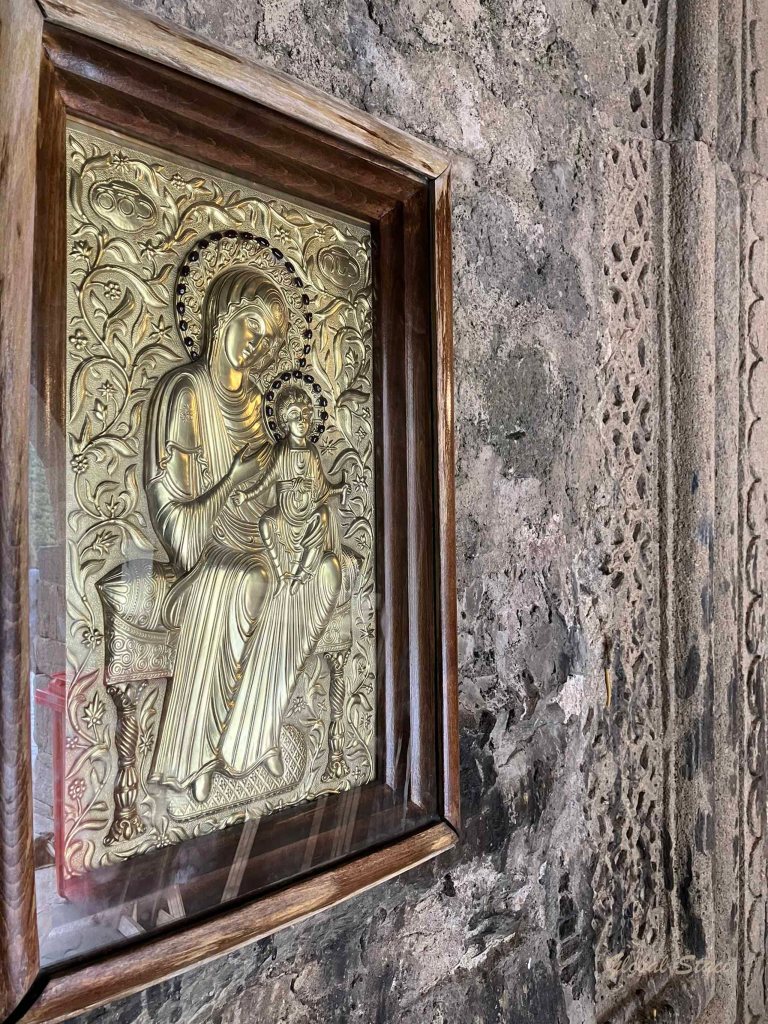


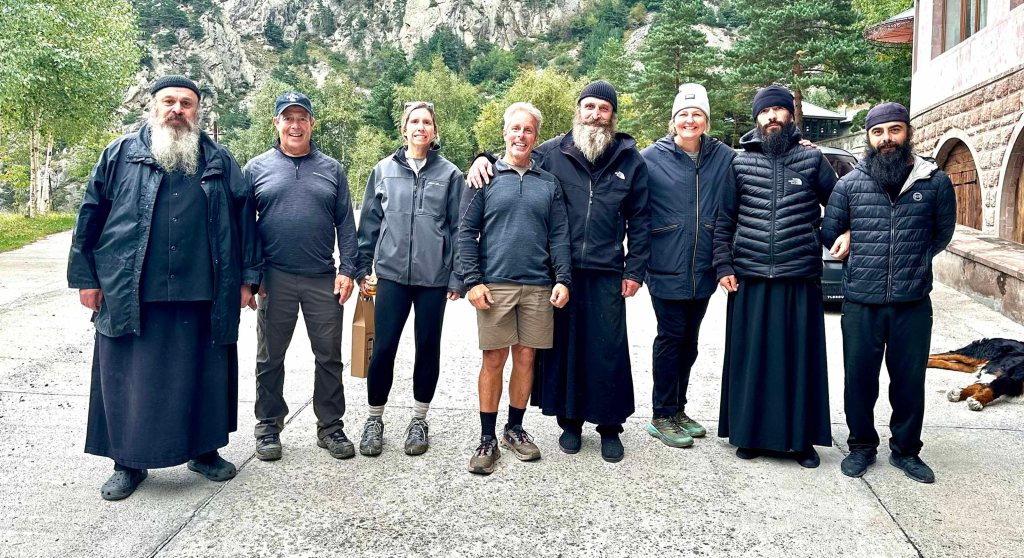
Our final destination in the area before heading south was the Dariali Monastery. The resident monks make wine, spirits, jam and harvest honey— in addition to their religious duties. The complex is new, but the main church was inspired by an 11th-century church in Nikortsminda. As a working monastery, open every day, it is a religious center and cultural hub.


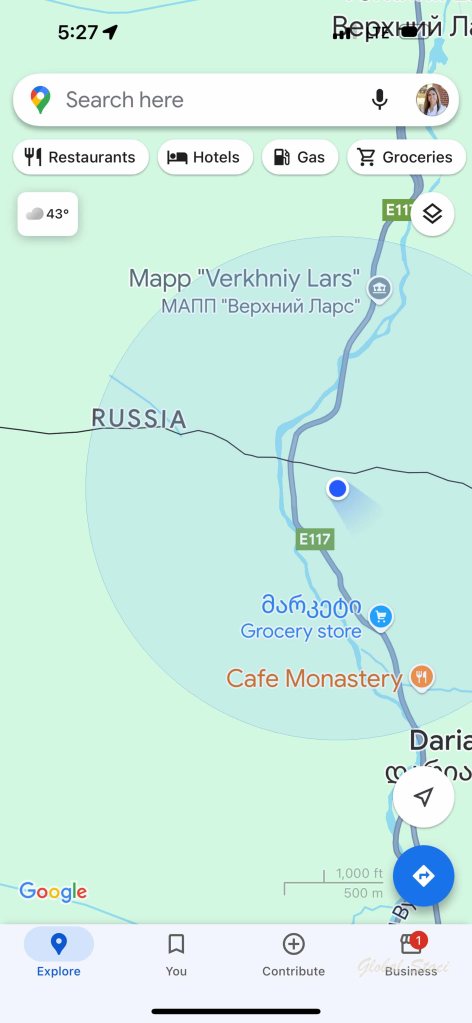

Interestingly, we learned the large trucks lined up on the side of the road were waiting to cross the border into Russia. There are two checkpoints, one in and one out.
Day 4 | Gudauri
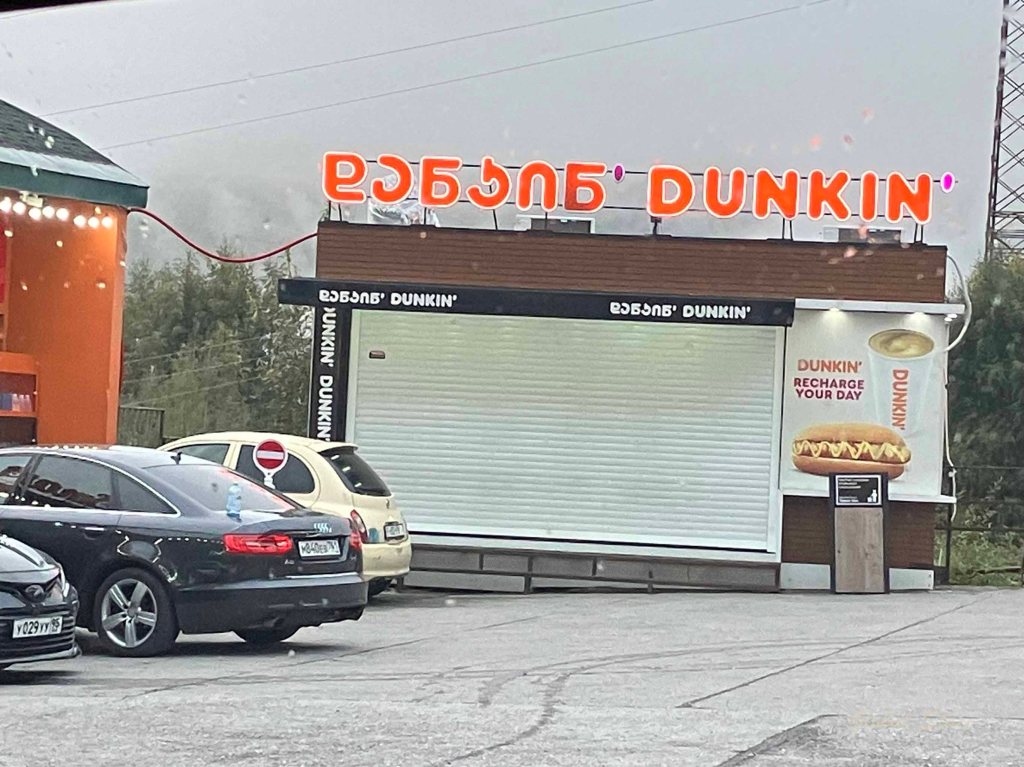
Heading south along the same winding Georgian Military Highway, take a break from the drive in Gudauri, a ski resort on the south-facing plateau of The Greater Caucasus Mountain Range. I recommend staying at the fabulous Gudauri Lodge. Enjoy a swim when the weather is warm or head to the slopes in the winter. Eat, drink and be merry.




Day 5 | Kvareli
Our final stop on our way to Tbilisi was Kvareli in the center of the Kakheti wine producing region. Considered by many to be the birthplace of wine making, Georgia is one of the oldest wine producing countries in the world, cultivating grapes for over 8000 years. Due to millennia of experience and the prominent economic role winemaking retains in Georgia today, in 2013, UNESCO added the ancient traditional Georgian winemaking method using the Kvevri clay jars to the UNESCO Intangible Cultural Heritage Lists.
There are loads of wineries, but we found they do not all offer tasting and are not always open to tourists! We did tour the Kvareli Wine Cave, Khareba Winery (where we liked the Saperavi) Javakhishili Wine Cellar (where we liked the Kisi Qvevri).
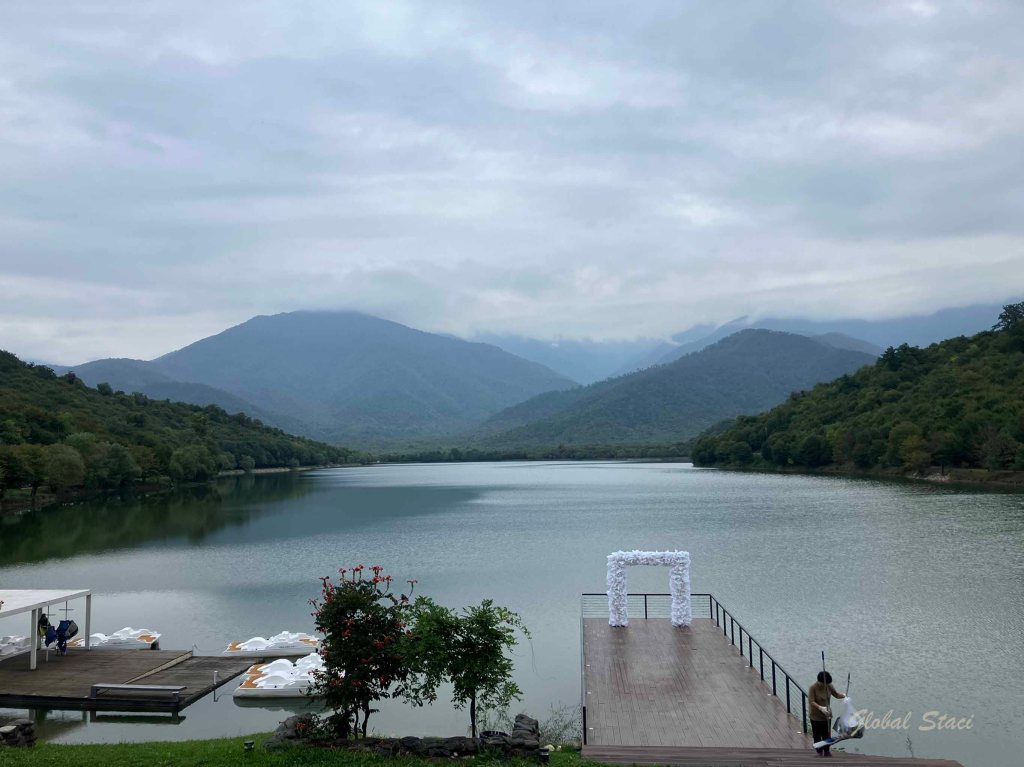
I recommend staying at the Kvareli Lake Resort, a destination unto itself.

 Global Staci
Pingback: The Fuller Center for Housing Global Builders build in Yerevan, Armenia
Pingback: The land, history, culture, food and wonderful people of Armenia.