DAY 1 | Over the hills and through the woods to BREB VILLAGE we go!
For our 4-day tour we hired a wonderful local guide, who is from Maramureș, who expertly planned the trip with us, drove, and guided us. Heading north from Cluj into the mountains we stopped at Casa Dobro for a coffee and sweet treat (Strada Muresan Andrei Nr. 25) in Baia Mare, a historic mining town and capital of Maramureș County. A little further into the mountains we stopped for lunch at Hanu ‘Lu’ Cobala, an agro-pension built in 2012.
Known for its well-preserved wooden churches, traditional village lifestyle, and local colorful dress, the whole of Maramureș is a near-living museum. Its wooden churches are outstanding examples of a range of architectural designs from different periods. The timber construction with characteristic tall, slim towers and shingle-covered roofs, is an expression of the cultural landscape of this mountainous area. Even new churches are built in the traditional style.
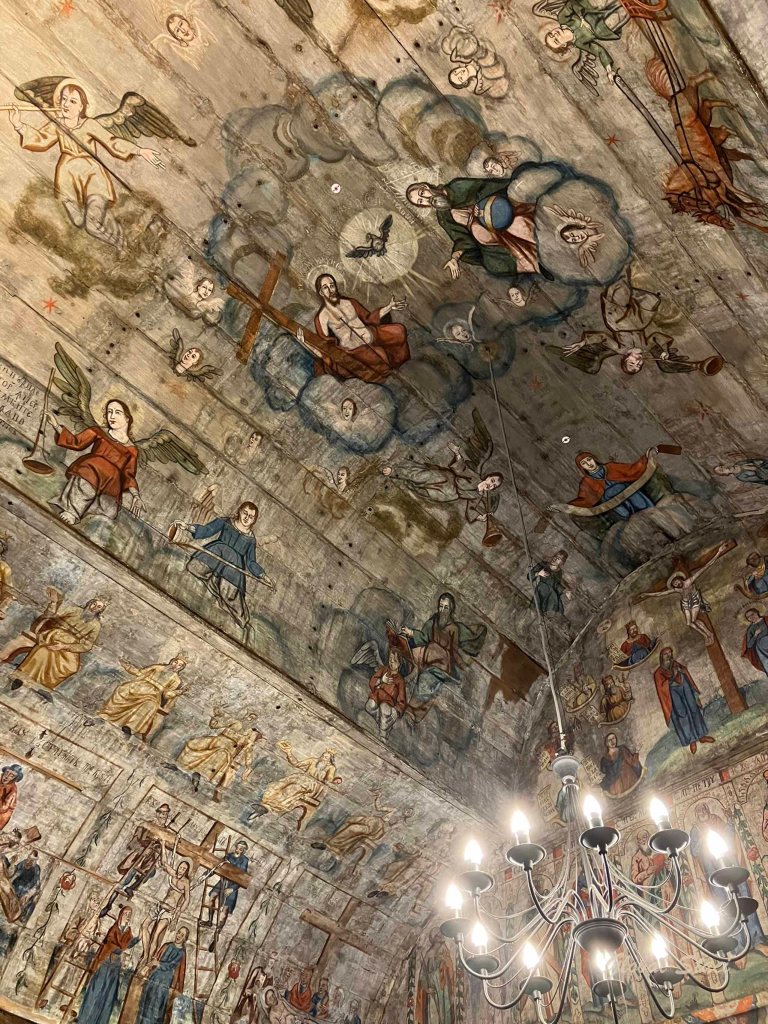
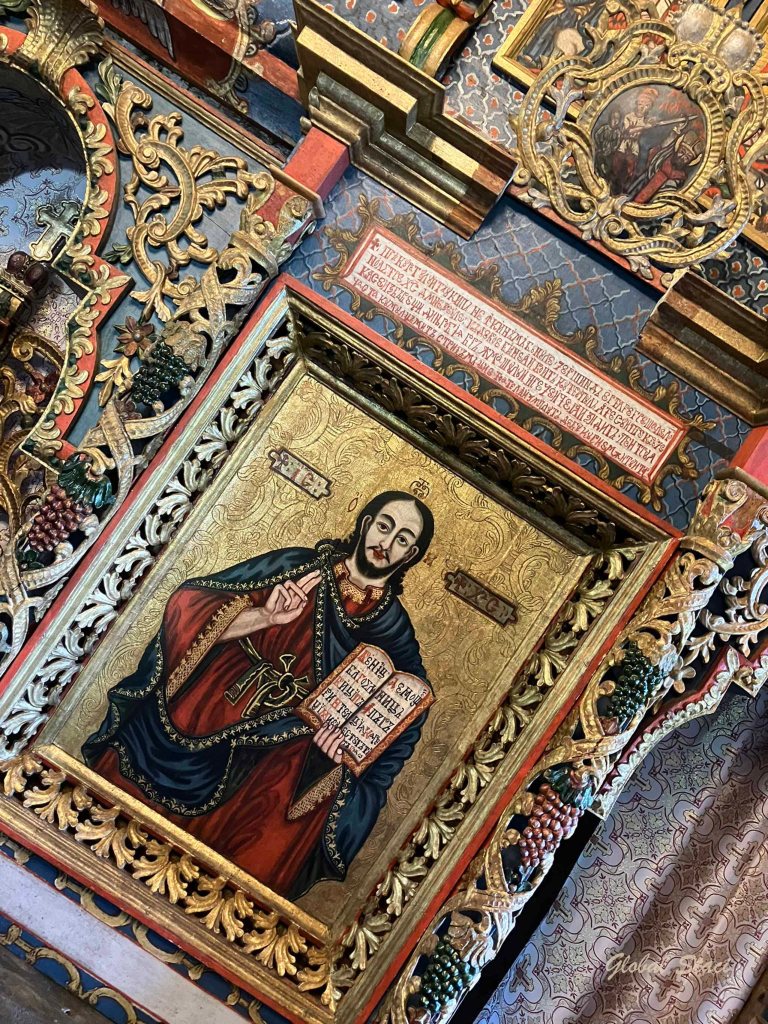
Today we saw the Church of the Archangels Michael and Gabriel in Surdesti village, built in 1721 from mountain oak wood, is one of eight buildings that make up the wooden churches of Maramures UNESCO World Heritage Site. The church now is a Greek-Catholic church in Surdesti village.


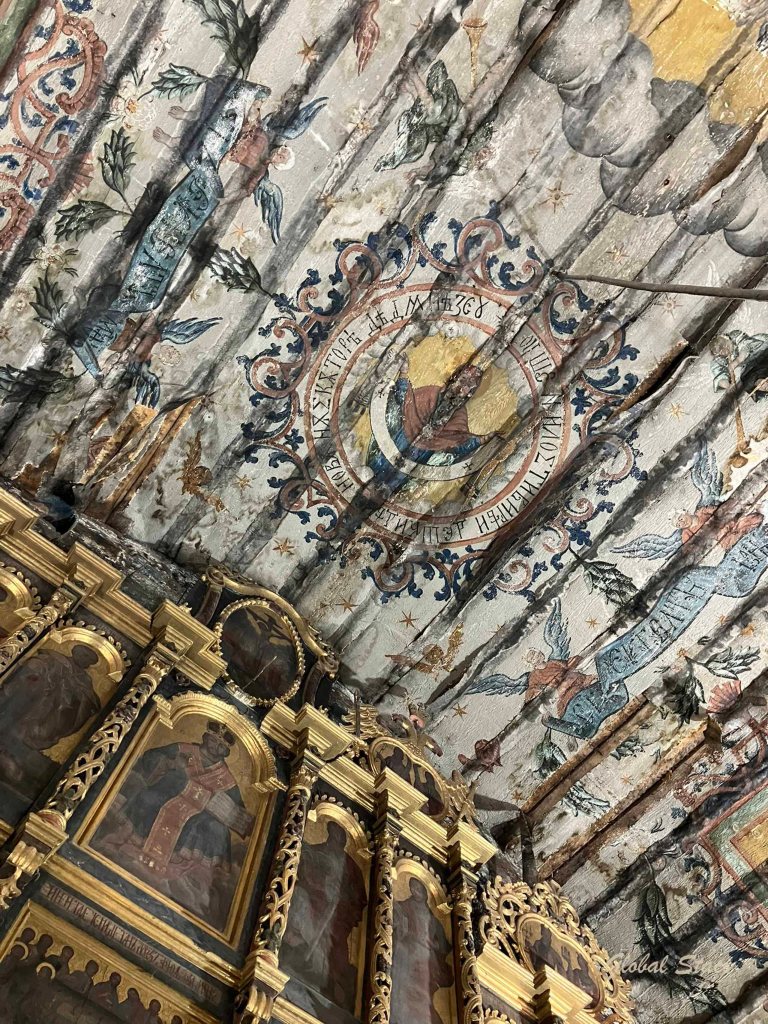


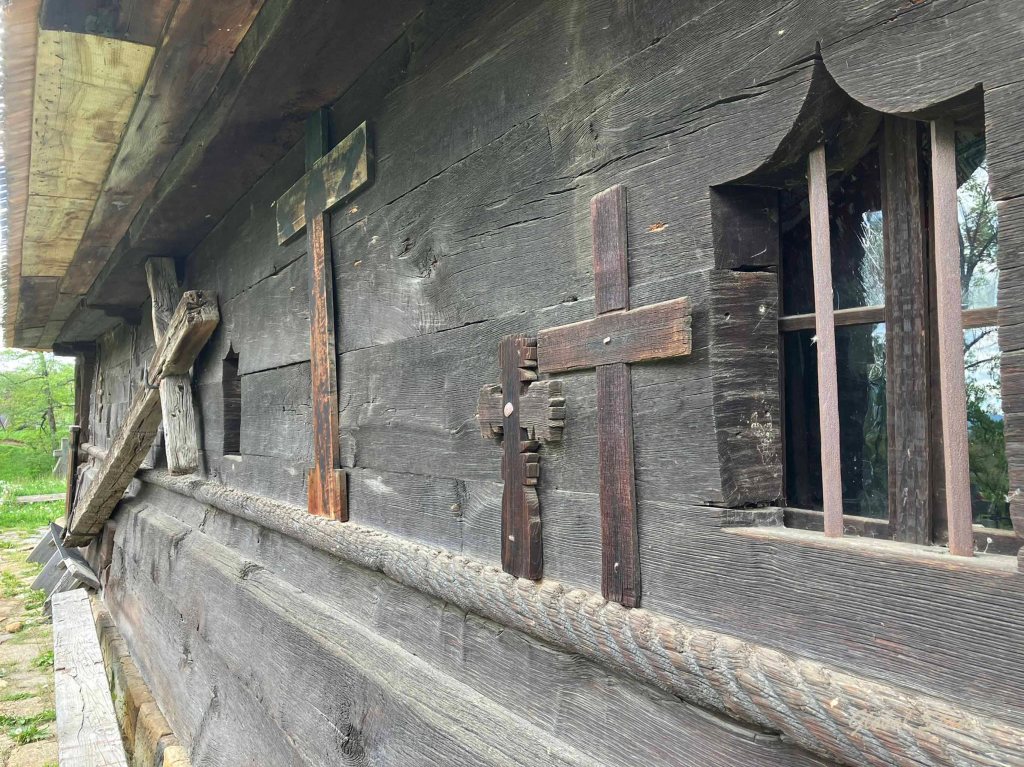
Our guide suggested we stay in one bed and breakfast for the duration, and it was the best idea. With the homey Veronica’s Guest House as our home base, we slept soundly, ate well, and thoroughly enjoyed the bucolic mountain village of Breb.
Later that afternoon in Breb our guide took us on a village walking tour, which was like a trip back in time. We met the “village poet,” historian, and author Vasile Oanea (you can find him on Facebook!), the village weaver, Maria, and the village mason. In many cases, we were invited into their homes, where they showed us their trade and we caught a glimpse of daily life for these incredibly hospitable people.


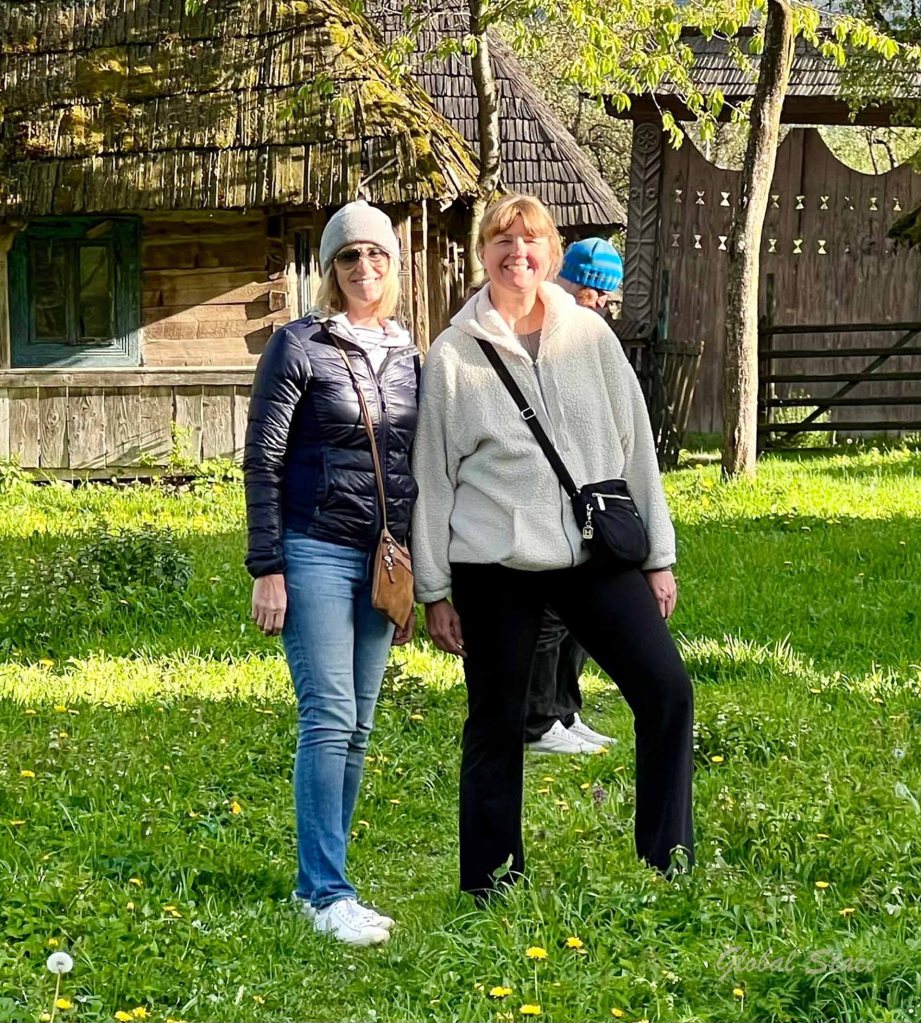
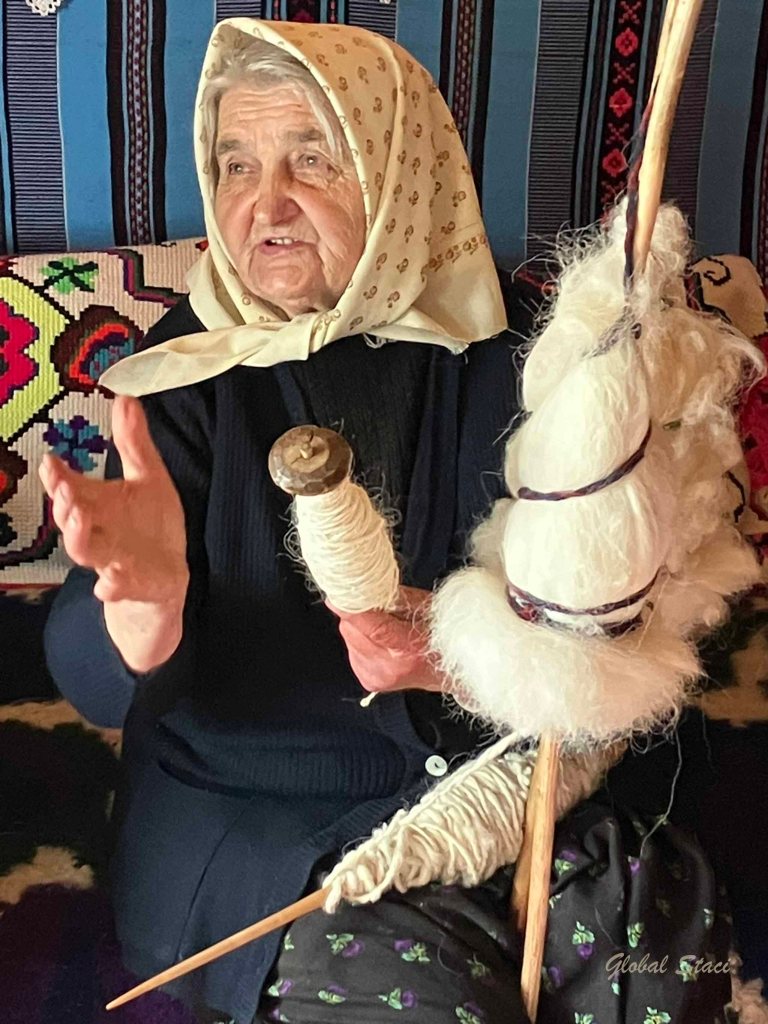

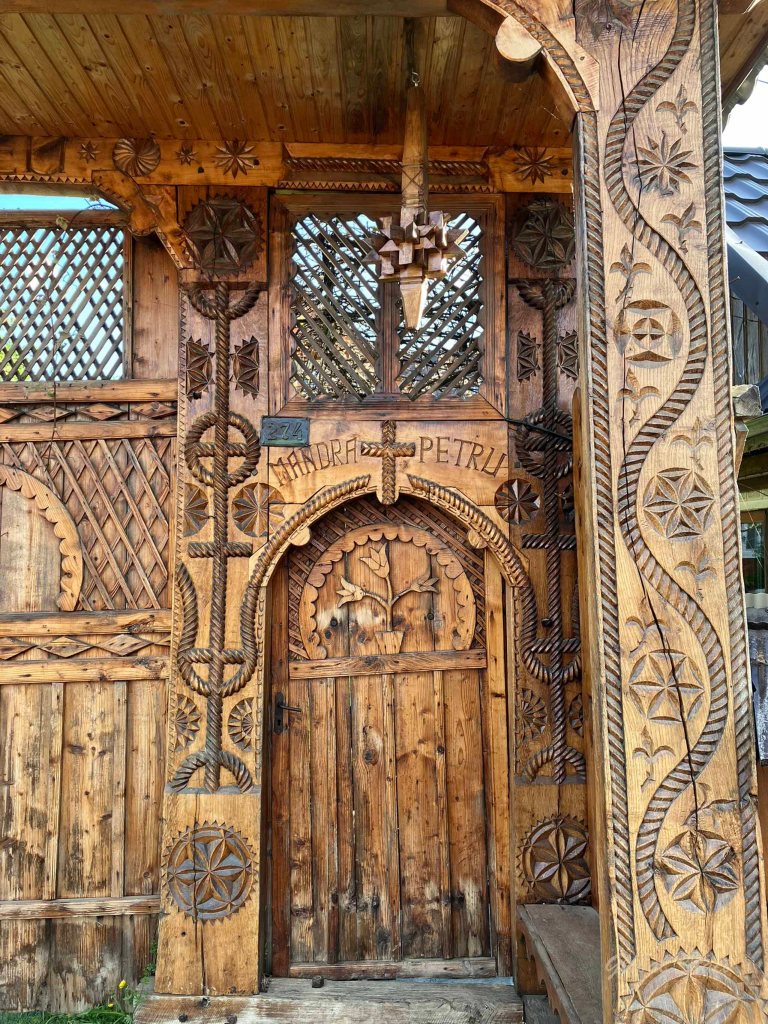
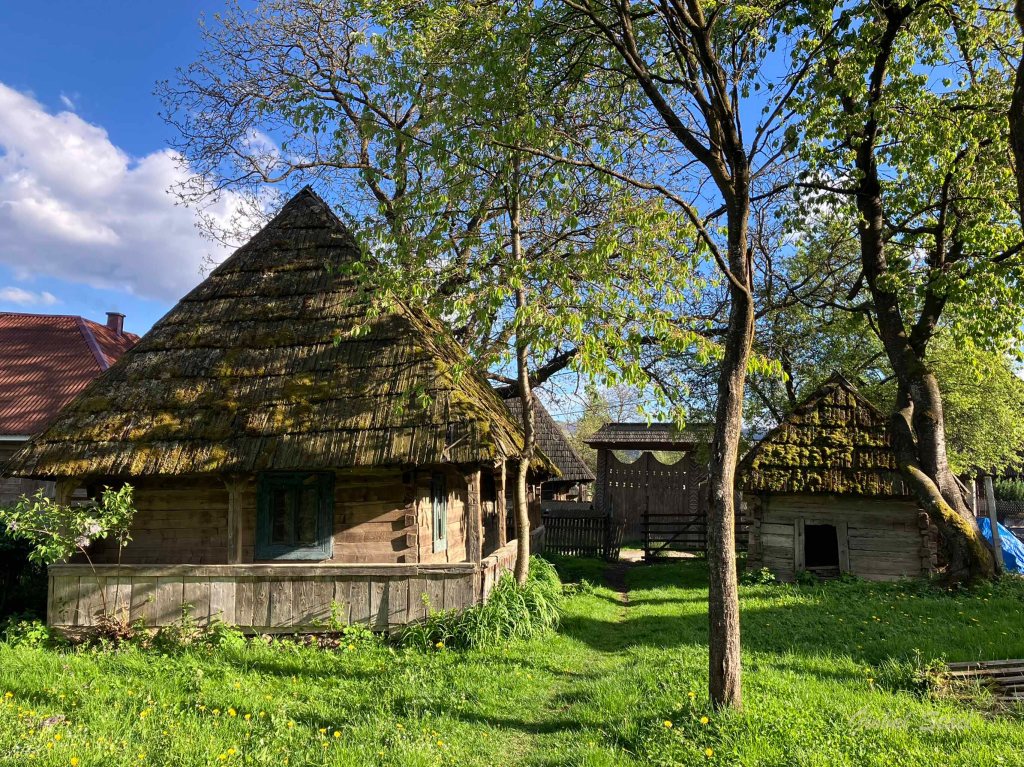
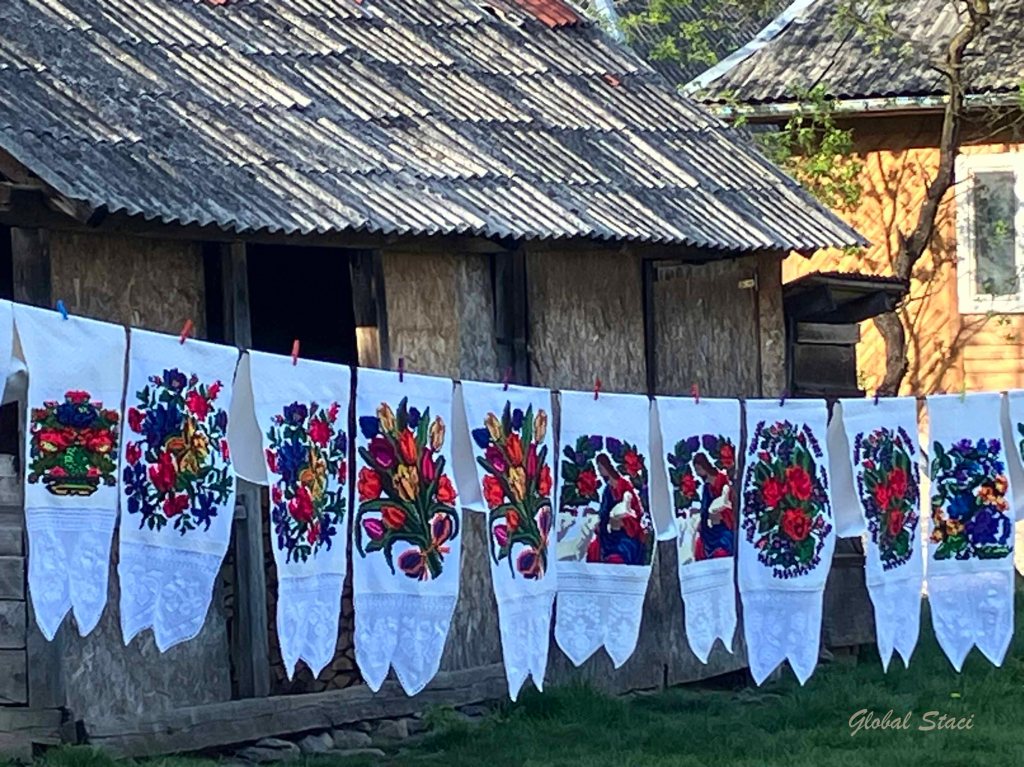
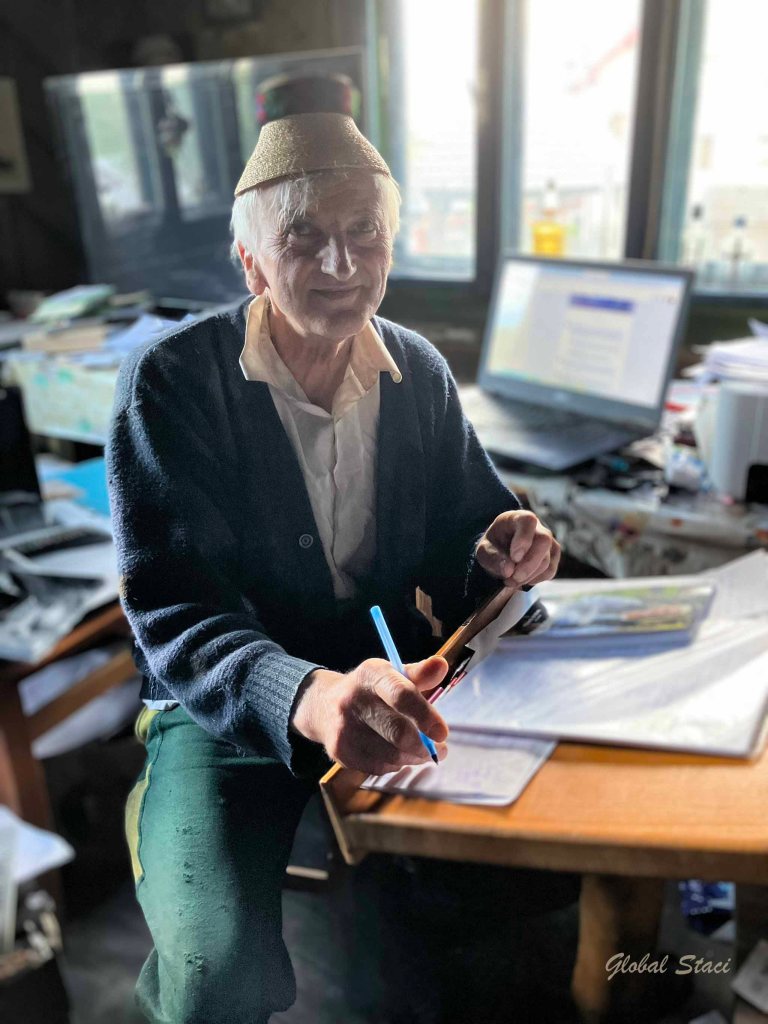
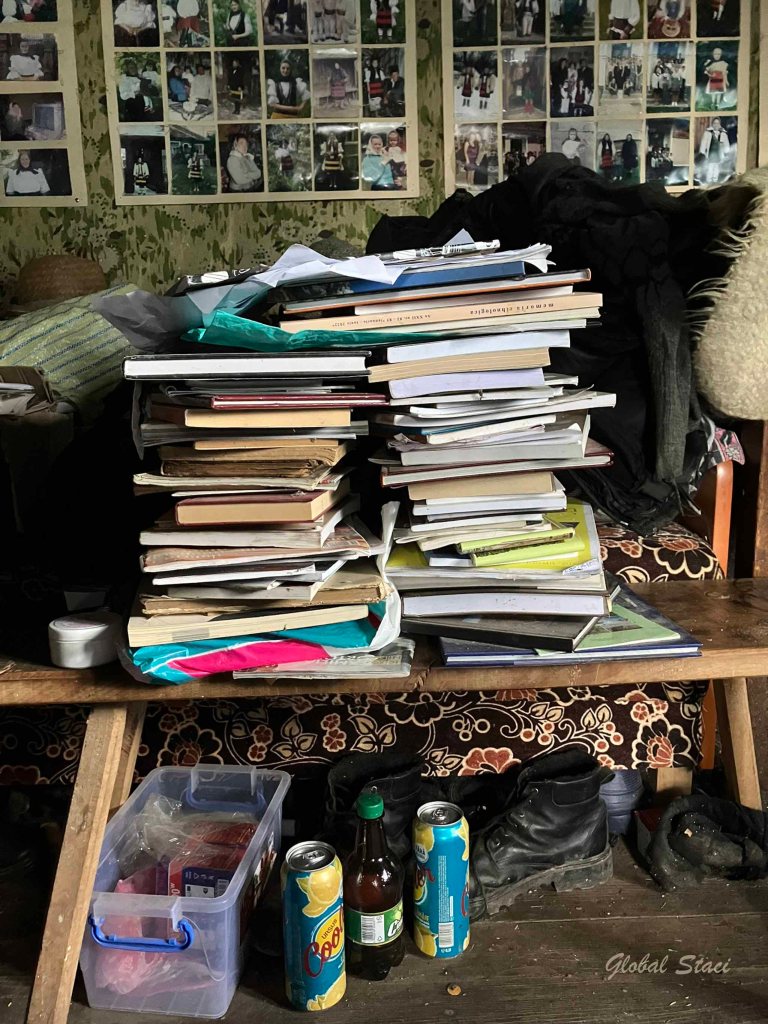
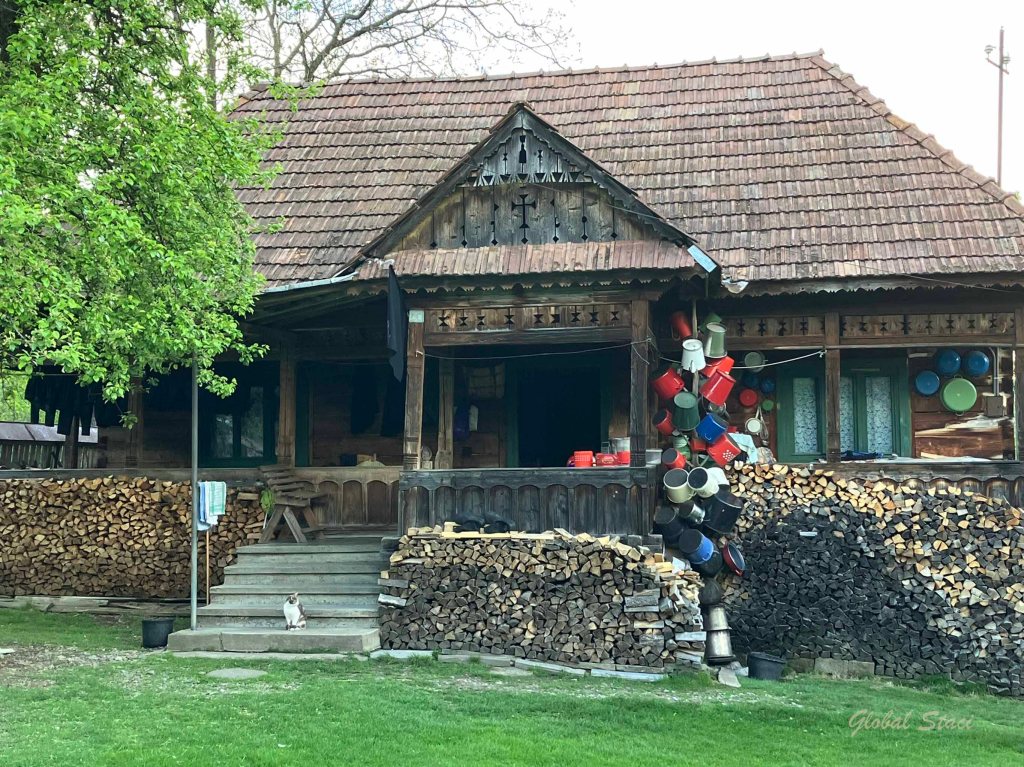
[PRO TIP: When you see a pole outside a house, heavy laden with hanging pots, ask about the significance; there’s an interesting and practical cultural meaning.]
DAY 2 | Peri & Barsana Monasteries & Merry Cemetary
We saw two more monasteries today—both inhabited by nuns. Barsana is new and has become quite popular. Peri, also new, is the tallest wooden church in Europe at 78 meters. All of the wooden churches in Maramureș are built according to the local style and, amazingly, without nails, just as they were originally.
Merry Cemetery, or Cimitirul Vesel, in Romanian, in Săpânța, is home to 800 creatively carved and painted wooden crosses bearing the sometimes dark or ironic humorous epitaphs of the deceased.
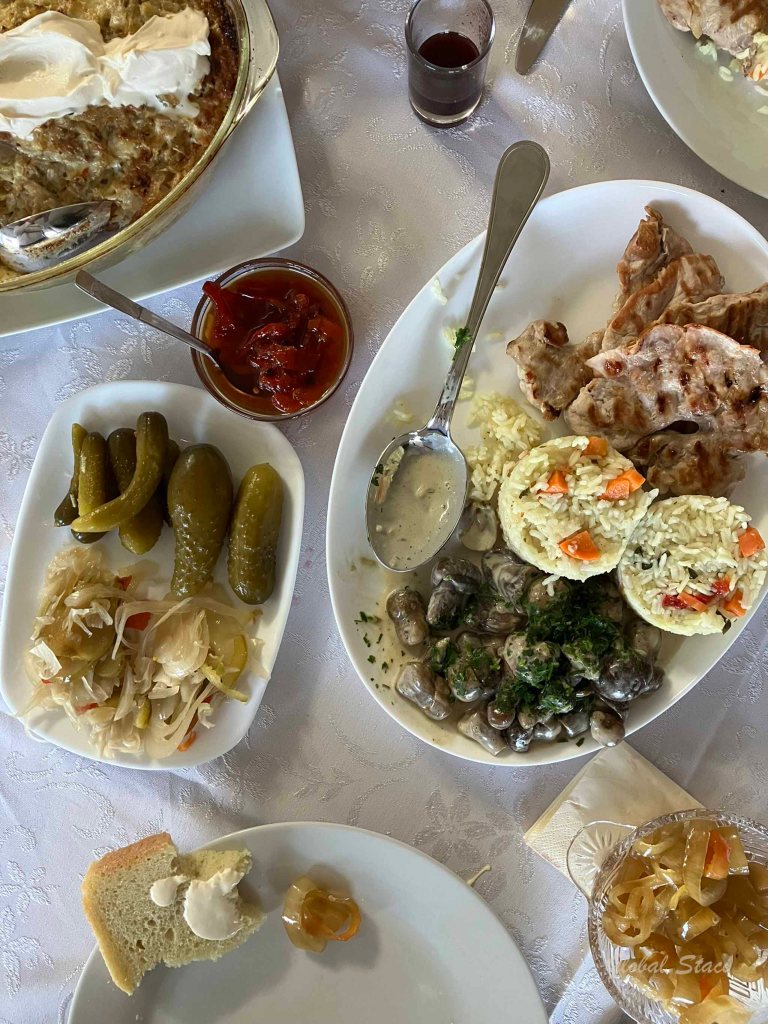
This evening our guide surprised us with the most delicious farm-to-table dinner at Pensiunea Mara. Prepared by owner Maria, the food was traditional Romanian, which means you’ll always begin with one or even two soups. All of the ingredients she used to make our meal were sourced from her farm or the surrounding area. It was an incredible meal.

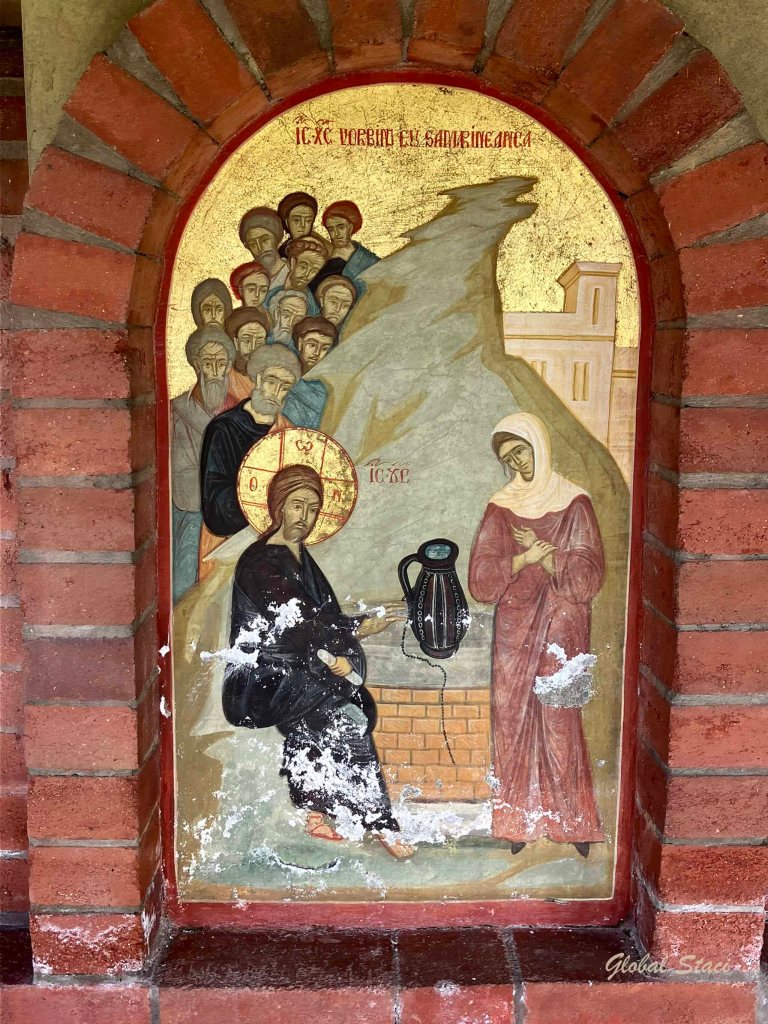
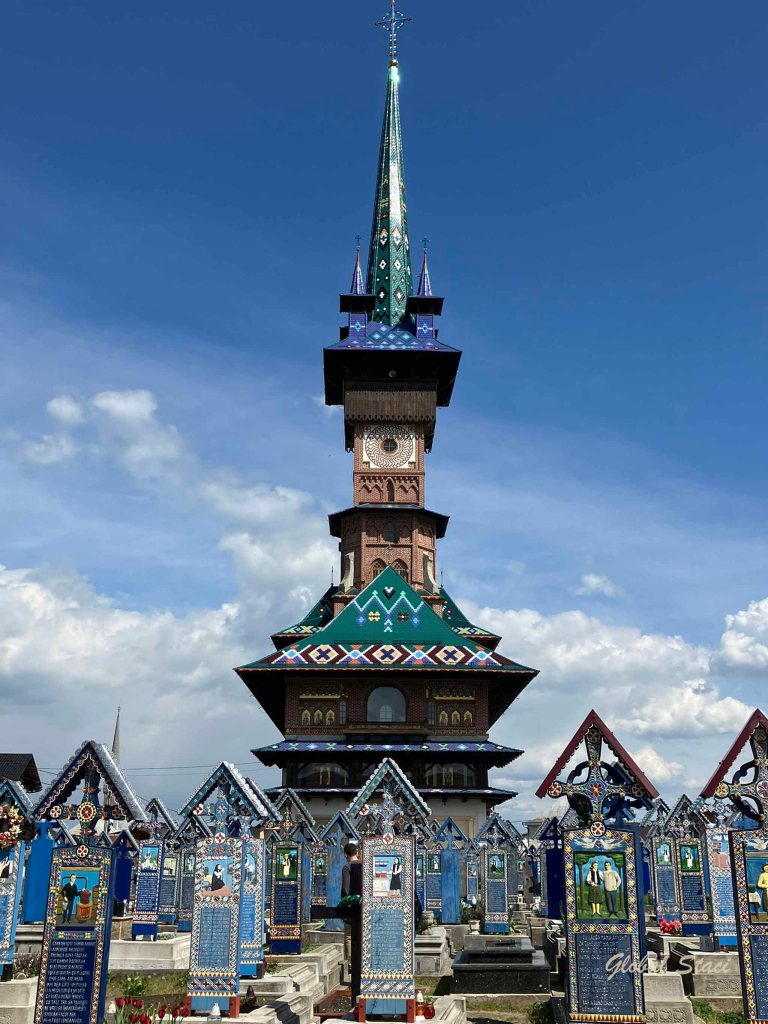
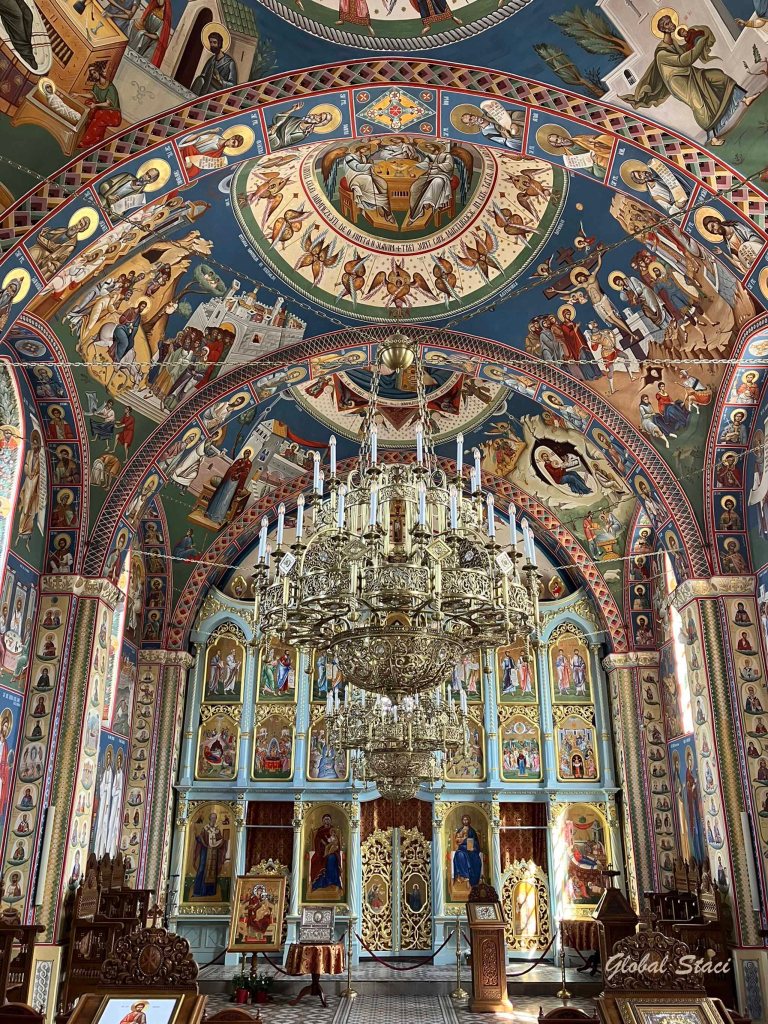
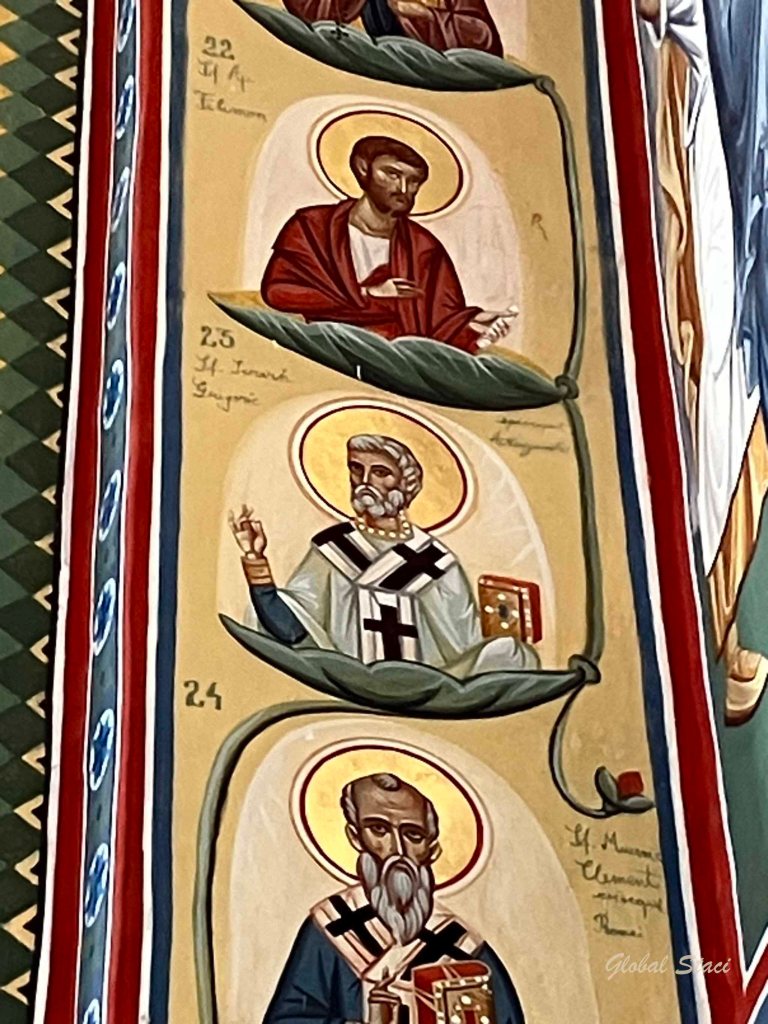
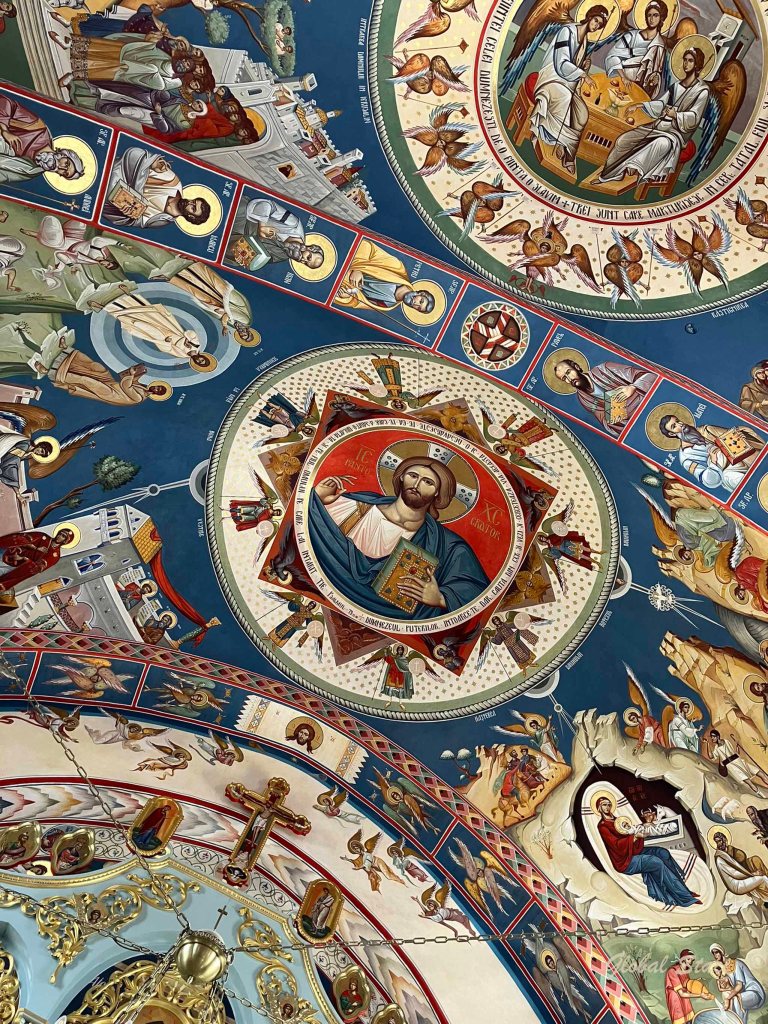
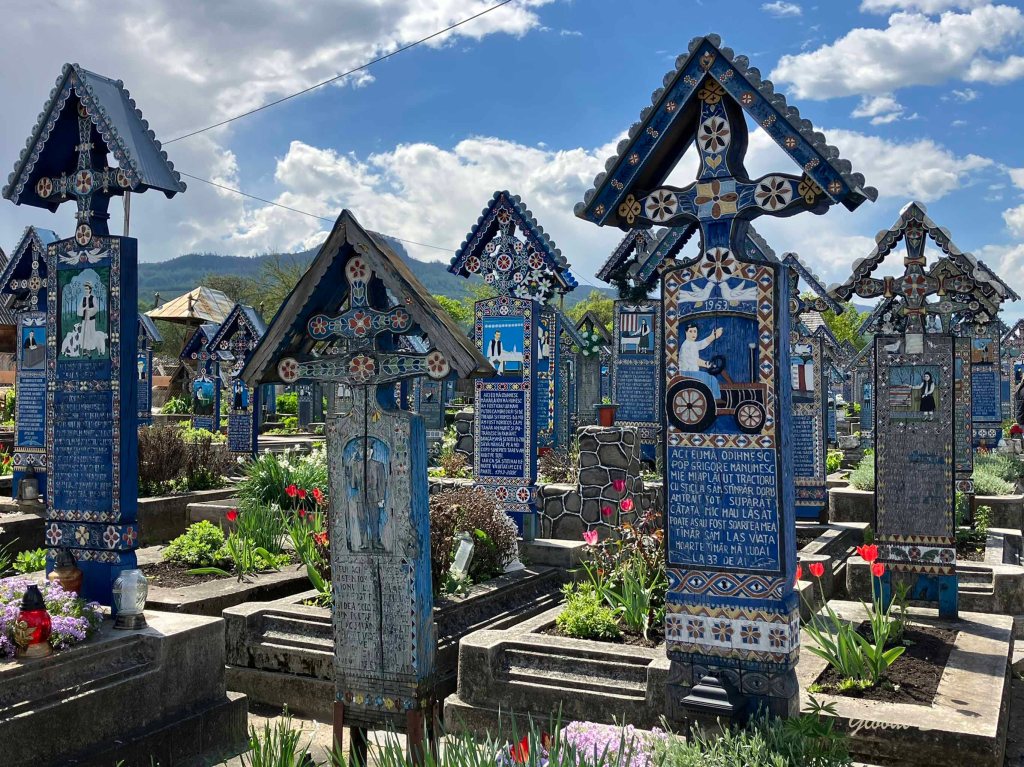

[PRO TIP: The church at Merry Cemetary is elaborately painted with orthodox saints, one for every day of the year. See if you can find your saint!]
DAY 3 | Sighet Museum & The Memorial of the Victims of Communism
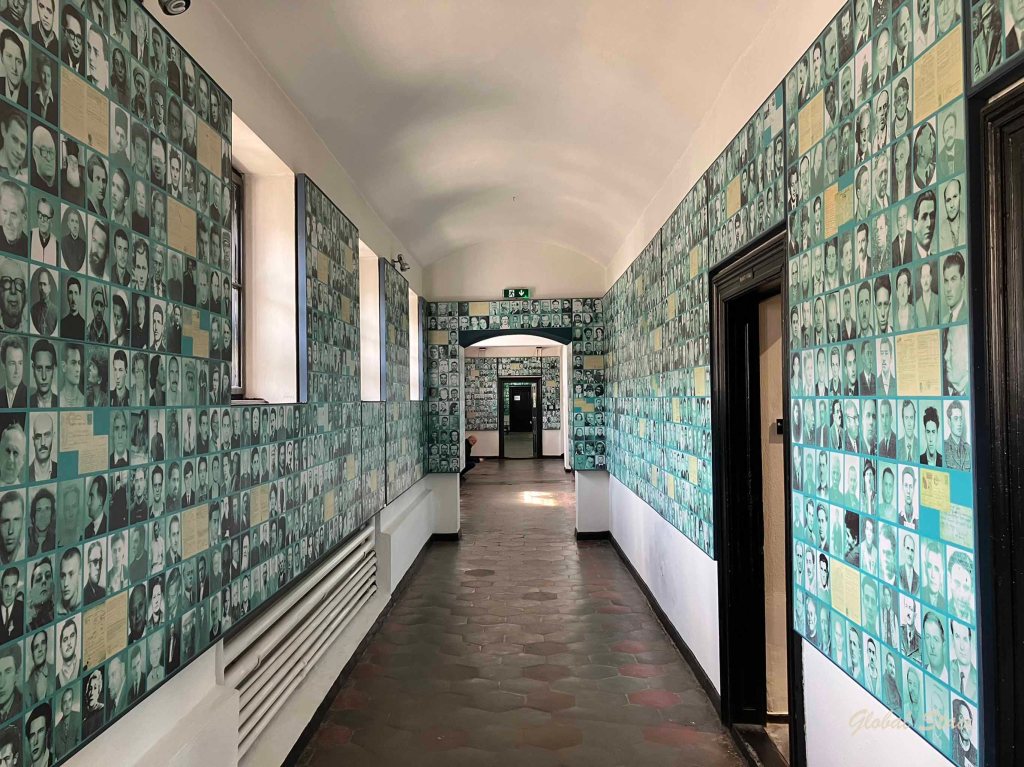
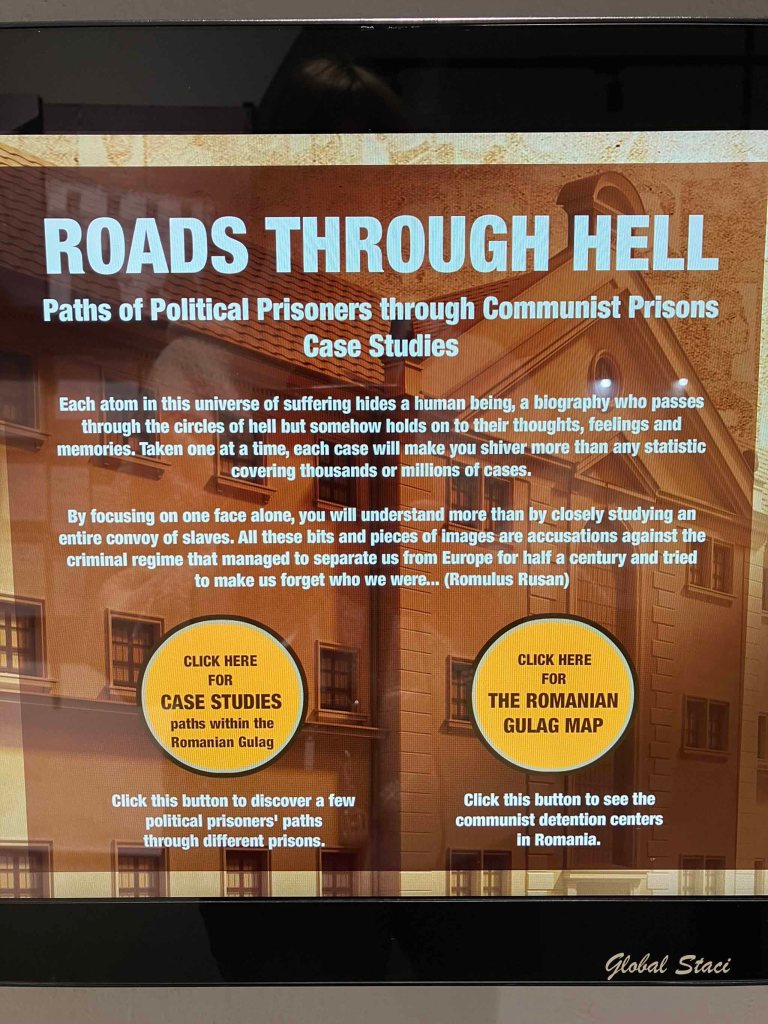
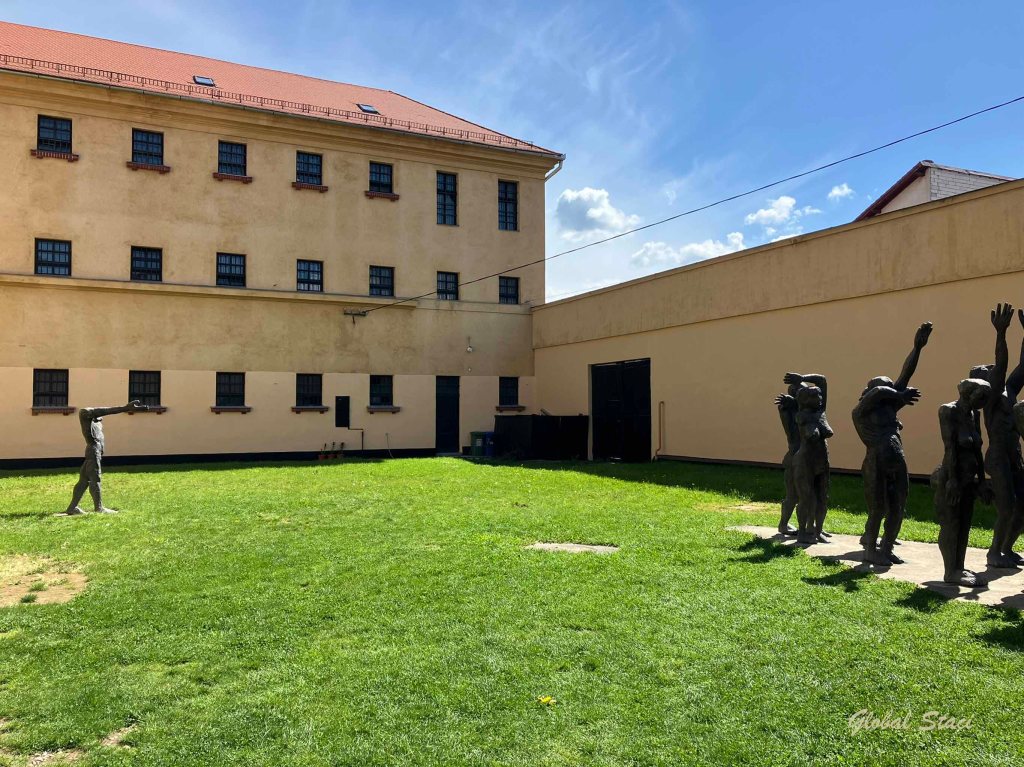
We enjoyed a very moving and educational visit to Sighet Museum, formerly Sighet Prison, and the Memorial of the Victims of Communism and of the Resistance. Opened in 1897 Sighet Prison was used by Romania to hold common criminals, prisoners of war, and during the communist occupation, political prisoners, often tortured or executed. This was ongoing until the Revolution in 1989—the same year I was living my very middle-class American teenage life graduating high school, going to college, and listening to Michael Jackson and Madonna. It’s incredible the things you learn when you travel.



Later that afternoon we rode one of the last narrow-gauge steam trains in Europe, the Mocăniță Maramureș. The train meandered through a little valley into the mountains, two hours in, and then two hours back. Unfortunately, it was dreary, raining, and a bit cold. Everyone agreed that if we’d known, we would have chosen something else to do on our last full day, although everyone onboard, whether a visitor or a local, made the most of it.


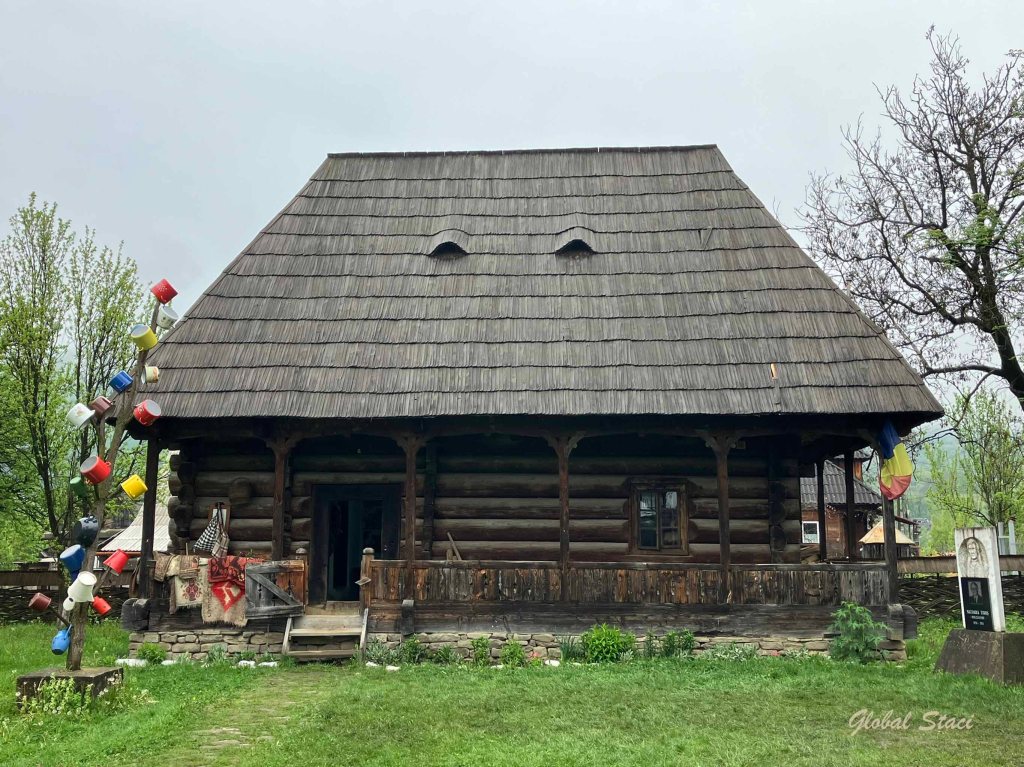

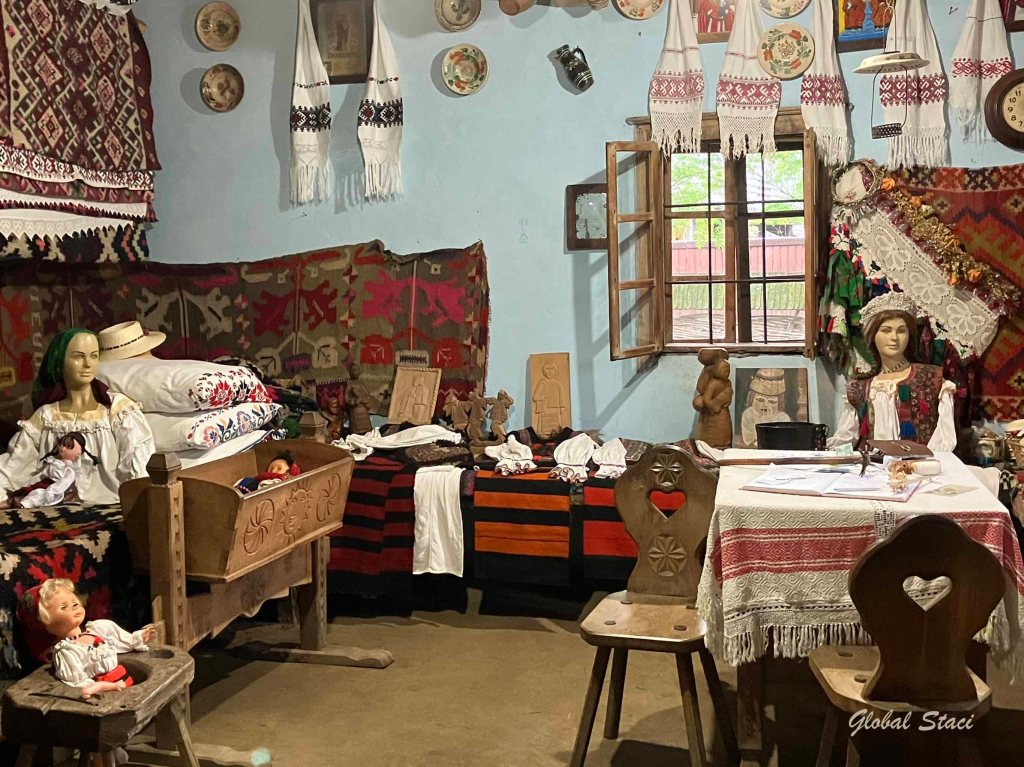
Before heading back to the guest house, we popped into Muzeul Ţărăncii Române a unique museum dedicated to the Romanian Peasant Woman. It certainly was interesting and we gained a new appreciation for our lives as women in the 21st century!
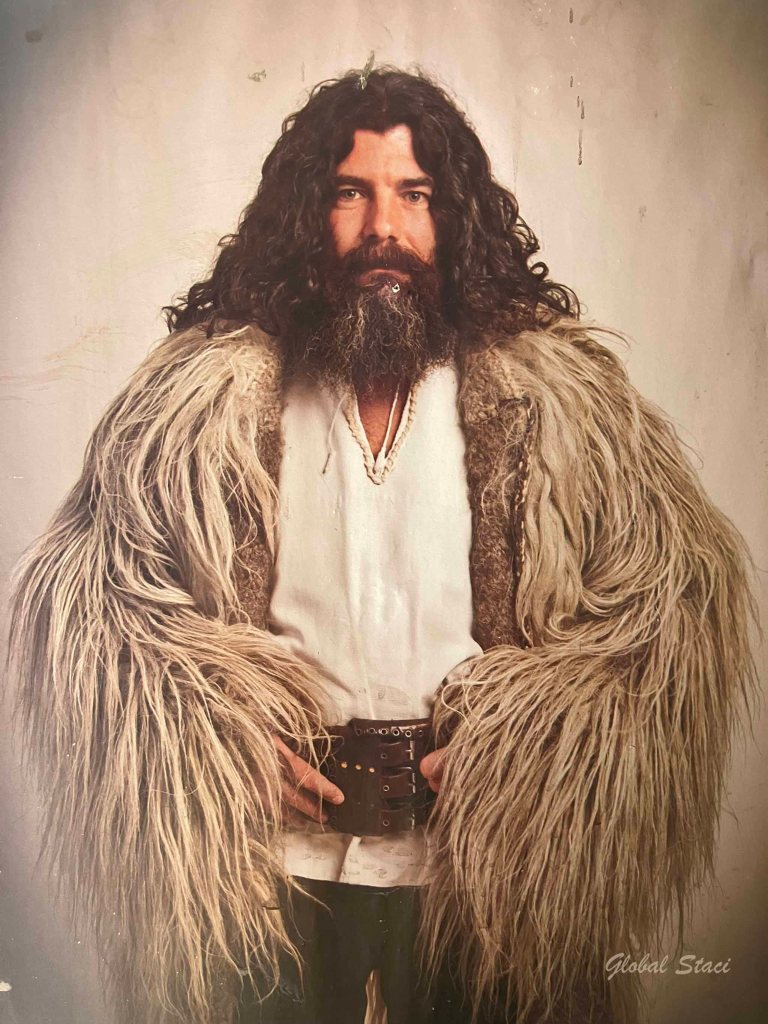
DAY 4 | Hairy Potter & One More Church
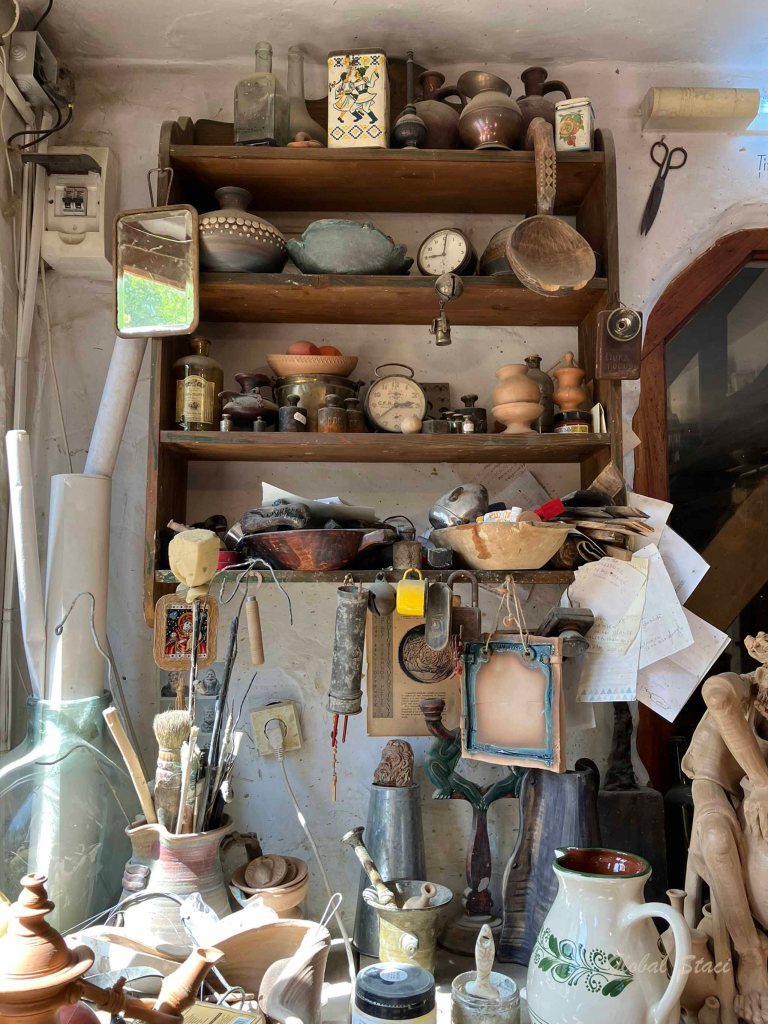
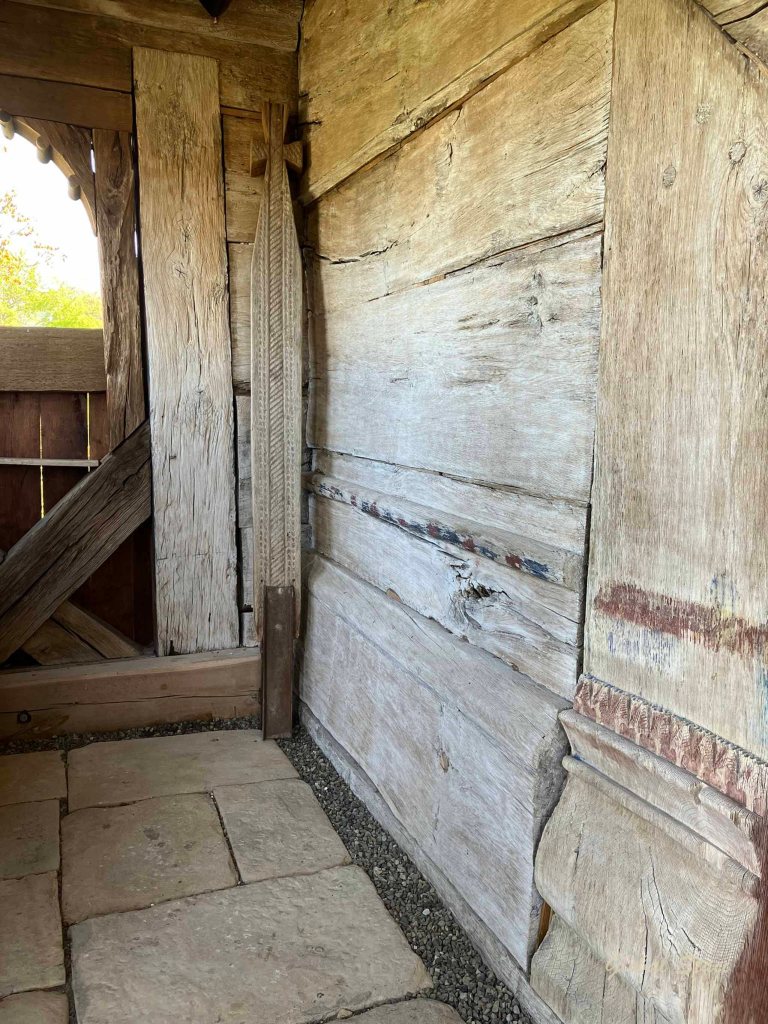
On our drive back to Cluj, we visited Casa Olarului, “The Potter’s House,” guesthouse, studio, and home of the remarkable Daniel Les and his wife. We tried our hands at the wheel before seeing another of the eight UNESCO wooden churches, Archangels Michael and Gabriel from 1798 (check out those huge logs used for the walls!).



We were sad to depart this beautiful relaxing village in the mountains, so grateful for our time here, those who have welcomed us, and the peaceful feeling we will take home in our hearts.
It was a magical adventure.
 Global Staci
Pingback: Global Builders ROMANIA | Cluj-Napoca
Pingback: Sibiu, Romania | The City with Eyes
Pingback: Nine Days Getting to Know My Roots in Slovakia